 ChipApex | Global Electronic Components Supplier

SEARCH
Search Product
Search Post
— IC芯片 | 连接器 | 传感器 | 被动器件 —
Search productSearch post
— IC芯片 | 连接器 | 传感器 | 被动器件 —
Consult the customer manager about the wholesale price.
consultation hotline:86-132-6715-2157
email:[email protected]
Contact the product manager for consultation. One-stop consultation is available.
Do you want a lower wholesale price? Please send us your inquiry and we will reply immediately.
The MAX3070EESD+ is a +3.3V, ±15kV ESD-protected RS-485 transceiver featuring one driver and one receiver. It operates within a supply voltage range of 2.97V to 3.63V and supports data rates up to 250kbps with reduced slew-rate drivers. The device includes fail-safe circuitry that guarantees a logic-high receiver output when inputs are open or shorted. Hot-swap capability prevents false transitions during power-up or insertion. Operating temperatures range from -40°C to +85°C, with typical supply current at 1.5mA.
Verify the specific suffix 'ESD+' against official Analog Devices documentation to confirm package type and RoHS compliance status. Confirm availability through authorized distributors as stock levels fluctuate. Ensure the ordering information matches the exact pinout and thermal specifications required for the target PCB layout.
Select this component for full-duplex RS-485 applications requiring robust protection against electrostatic discharge and bus contention. The fixed 250kbps maximum data rate suits low-to-medium speed networks where minimizing EMI is critical. Verify that the system operates within the specified 3.3V supply tolerance and temperature range.
This part belongs to the MAX3070E–MAX3079E family of high-speed transceivers designed for RS-485/RS-422 communication. While other members in the series offer higher speeds or half-duplex configurations, the MAX3070E specifically provides full-duplex operation with enhanced slew-rate limiting for error-free transmission over noisy industrial environments.
Direct functional substitutes within the same family include the MAX3071E and MAX3072E, which share identical electrical characteristics and pinouts. Ensure any replacement maintains the full-duplex configuration and 250kbps slew-rate limitation if those specific parameters are required by the design.
The receiver outputs a logic-high state when the receiver inputs are open, shorted, or connected to a terminated line with all transmitters disabled, ensuring a known state during idle periods.
It prevents erroneous data transfer by holding the driver enable (DE) low and receiver enable (RE) high during initial power-up or board insertion, protecting against transient disturbances on the bus.
Reduced slew rates minimize electromagnetic interference (EMI) and reduce signal reflections caused by improperly terminated cables, allowing for error-free data transmission.
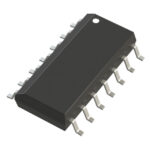 MAX3070EESD+

The activity of extra discounts on wholesale prices is in full swing…
Please fill in your contact information and we will send you the latest wholesale price list.





