 ChipApex | Global Electronic Components Supplier

SEARCH
Search Product
Search Post
— IC芯片 | 连接器 | 传感器 | 被动器件 —
Search productSearch post
— IC芯片 | 连接器 | 传感器 | 被动器件 —
Consult the customer manager about the wholesale price.
consultation hotline:86-132-6715-2157
email:[email protected]
Contact the product manager for consultation. One-stop consultation is available.
Do you want a lower wholesale price? Please send us your inquiry and we will reply immediately.
The MAX3079EEPD+ is a +3.3V, ±15kV ESD-protected, fail-safe, hot-swap RS-485 transceiver featuring one driver and one receiver in a 14-pin Plastic DIP package. It supports selectable half-duplex or full-duplex operation via the H/F pin. The device offers pin-selectable slew rates for data transmission up to 250kbps (SRL unconnected), 500kbps (SRL = VCC), or 16Mbps (SRL = GND). Independent phase control pins allow correction of twisted-pair reversal. Supply current is 0.8mA typical with shutdown mode drawing 10µA maximum.
Verify the specific suffix 'EEPD+' corresponds to the required temperature range (-40°C to +85°C) and 14-pin PDIP packaging. Confirm RoHS compliance status through official manufacturer documentation prior to procurement. Ensure ordering details match the exact functional requirements for the selected duplex and slew-rate modes.
Select this component when flexible configuration of duplex mode and data rate is required within a single package. The MAX3079E is suitable for designs needing independent phase control to address wiring errors. Compare against fixed-function variants like the MAX3076E or MAX3073E if specific speed or duplex constraints simplify the design without requiring programmability.
The MAX3079E belongs to the MAX3070E–MAX3079E family of high-speed RS-485/RS-422 transceivers manufactured by Analog Devices / Maxim Integrated. This series provides robust protection features including ±15kV ESD protection and true fail-safe receivers while maintaining EIA/TIA-485 compatibility across the product line.
Direct functional substitutes within the same family include other MAX307xE variants such as MAX3076E or MAX3073E, though these lack the programmable slew-rate and duplex selection features of the MAX3079E. Verify pinout compatibility and electrical specifications before substitution.
The data rate is set via the SRL pin: leave unconnected for 250kbps, connect to VCC for 500kbps, or connect to GND for 16Mbps.
Yes, the H/F pin selects the mode; drive it low or leave unconnected for full-duplex, or drive it high for half-duplex.
These pins allow independent inversion of the transmitter and receiver phases to correct for reversed twisted-pair connections.
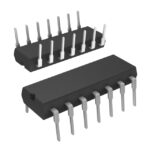 MAX3079EEPD+

The activity of extra discounts on wholesale prices is in full swing…
Please fill in your contact information and we will send you the latest wholesale price list.





