 ChipApex | Global Electronic Components Supplier
SEARCH
Search Product
Search Post
— IC芯片 | 连接器 | 传感器 | 被动器件 —
Search productSearch post
— IC芯片 | 连接器 | 传感器 | 被动器件 —
Consult the customer manager about the wholesale price.
consultation hotline:86-132-6715-2157
email:[email protected]
Contact the product manager for consultation. One-stop consultation is available.
Do you want a lower wholesale price? Please send us your inquiry and we will reply immediately.
The MAX3093EESE+ is a quad RS-422/RS-485 receiver manufactured by Analog Devices Inc./Maxim Integrated. It operates from a single +5V supply and supports data rates up to 10Mbps. The device features ±15kV ESD protection via IEC 1000-4-2 Air-Gap Discharge, ±8kV Contact Discharge, and Human Body Model standards. Propagation delays are guaranteed within ±8ns tolerance for device-to-device matching. It includes a low-power shutdown mode with 1nA supply current and a fail-safe feature ensuring logic-high output on open inputs. The component is housed in a 16-pin Narrow SO package.
Verify the specific ordering suffix 'EESE+' against the manufacturer's official documentation to confirm the extended temperature range (-40°C to +85°C) and the narrow SOIC package type. Ensure compatibility with existing board layouts as this component serves as a pin-compatible upgrade to legacy devices like the '34C86. Cross-reference datasheet revision dates to validate electrical characteristics before finalizing procurement orders.
Select the MAX3093EESE+ when a +5V supply voltage is required for RS-422 or RS-485 communication interfaces. This component is appropriate for designs needing high ESD immunity and precise propagation delay matching between multiple ICs. Consider this part if the application demands a low-power shutdown capability to minimize energy consumption during idle periods while maintaining standard receiver functionality.
This component belongs to the MAX3093E/MAX3094E family of low-power quad receivers. While the MAX3094E variant operates at +3.3V, the MAX3093E specifically targets +5V systems. The series is designed as a direct replacement for industry-standard parts, offering improved power efficiency and enhanced ESD protection without requiring changes to the surrounding circuit topology or pin assignments.
The MAX3093EESE+ is documented as a pin-compatible, low-power upgrade to the industry-standard '34C86 receiver. Designers replacing legacy components should verify that the new propagation delay specifications meet the system timing requirements.
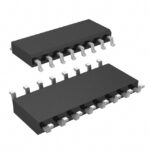 MAX3093EESE+
The activity of extra discounts on wholesale prices is in full swing…
Please fill in your contact information and we will send you the latest wholesale price list.





