 ChipApex | Global Electronic Components Supplier
SEARCH
Search Product
Search Post
— IC芯片 | 连接器 | 传感器 | 被动器件 —
Search productSearch post
— IC芯片 | 连接器 | 传感器 | 被动器件 —
Consult the customer manager about the wholesale price.
consultation hotline:86-132-6715-2157
email:[email protected]
Contact the product manager for consultation. One-stop consultation is available.
Do you want a lower wholesale price? Please send us your inquiry and we will reply immediately.
The MAX3094EEUE-T is a low-power quad RS-422/RS-485 receiver manufactured by Analog Devices Inc./Maxim Integrated. It operates on a single 3.3V supply and supports data rates up to 10Mbps. The device features ±15kV ESD protection on all inputs, ensuring robustness in harsh environments. It is housed in a 16-pin TSSOP package with an operating temperature range of -40°C to +85°C. Key electrical parameters include a propagation delay tolerance of ±10ns, a shutdown current of 1nA, and a typical supply current of 3.5mA. The receiver inputs provide a fail-safe function, guaranteeing a high output when the bus is open.
Verify the specific suffix 'T' indicates tape-and-reel packaging when sourcing from distributors. Confirm the extended temperature grade 'E' (-40°C to +85°C) matches the application requirements. Ensure compatibility with 3.3V logic levels. Check for RoHS compliance status as indicated by the '+' suffix in related part numbers. Validate pinout compatibility if replacing legacy components like the 34C86.
Select this component when high-speed data transmission up to 10Mbps is required alongside significant ESD protection. It is suitable for designs needing multiple receivers on a single bus without integrated drivers. Consider the TSSOP package constraints for PCB layout. Compare against the MAX3096 if 5V operation is preferred instead of 3.3V. Ensure the system can accommodate the specified propagation delay variations.
This device belongs to the MAX3094E family of quad differential line receivers. It serves as a ruggedized interface solution for serial communication buses. The EE variant specifically denotes the extended industrial temperature range and enhanced ESD protection compared to standard commercial grades. It complements driver families like the MAX3040 series in complete transceiver designs.
The MAX3094ECUE+ is a pin-compatible alternative with a commercial temperature range (0°C to 70°C). The MAX3096 series offers similar functionality but operates at 5V. Verify that any substitute maintains the 10Mbps data rate and 16-pin TSSOP footprint. Ensure the replacement meets the same ±15kV ESD specification if environmental conditions remain unchanged.
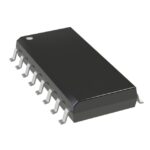 MAX3094EEUE-T
The activity of extra discounts on wholesale prices is in full swing…
Please fill in your contact information and we will send you the latest wholesale price list.





