 ChipApex | Global Electronic Components Supplier
SEARCH
Search Product
Search Post
— IC芯片 | 连接器 | 传感器 | 被动器件 —
Search productSearch post
— IC芯片 | 连接器 | 传感器 | 被动器件 —
Consult the customer manager about the wholesale price.
consultation hotline:86-132-6715-2157
email:[email protected]
Contact the product manager for consultation. One-stop consultation is available.
Do you want a lower wholesale price? Please send us your inquiry and we will reply immediately.
The MAX3095CPE+ is a quad RS-422/RS-485 receiver manufactured by Analog Devices Inc./Maxim Integrated. It operates from a single +5V supply and supports data rates up to 10Mbps. The device features ±15kV ESD protection on all inputs, compliant with IEC 1000-4-2 standards. Propagation delays are guaranteed within ±8ns for device-to-device matching. It includes complementary enable inputs for a 1nA low-power shutdown mode and provides fail-safe logic-high outputs when inputs are open circuit. The unit load input impedance allows up to 128 receivers on a bus. It is housed in a 16-pin Plastic DIP package and functions within an operating temperature range of 0°C to +70°C.
Verify the specific suffix 'CPE+' against official documentation to confirm lead-free/RoHS compliance and the 16-pin PDIP package configuration. Ensure the operating environment remains within the specified 0°C to +70°C commercial temperature range. Cross-reference the exact part number with manufacturer ordering information to validate current production status and availability constraints.
Select this component for designs requiring robust ESD protection and precise timing synchronization across multiple receiver channels. The MAX3095 is optimized for +5V systems, whereas the MAX3096 variant serves +3.3V applications. Consider the quarter-unit-load input impedance when calculating total bus loading capacity. Verify that the required data rate does not exceed the 10Mbps maximum specification under the intended operating voltage and temperature conditions.
This device belongs to the MAX3095/MAX3096 family of rugged, low-power quad receivers designed for harsh environments. It serves as a pin-compatible, low-power upgrade to the industry-standard '26LS32. The MAX3095 specifically targets +5V operation, while the MAX3096 is designed for +3.3V supplies. Both variants share identical functional characteristics regarding ESD protection and bus loading capabilities.
The MAX3095 is documented as a direct pin-compatible replacement for the industry-standard '26LS32. Designers should verify that the legacy component's performance specifications align with the MAX3095's tighter propagation delay tolerances and lower power consumption requirements.
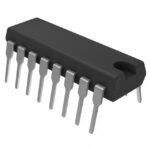 MAX3095CPE
The activity of extra discounts on wholesale prices is in full swing…
Please fill in your contact information and we will send you the latest wholesale price list.





