 ChipApex | Global Electronic Components Supplier
SEARCH
Search Product
Search Post
— IC芯片 | 连接器 | 传感器 | 被动器件 —
Search productSearch post
— IC芯片 | 连接器 | 传感器 | 被动器件 —
Consult the customer manager about the wholesale price.
consultation hotline:86-132-6715-2157
email:[email protected]
Contact the product manager for consultation. One-stop consultation is available.
Do you want a lower wholesale price? Please send us your inquiry and we will reply immediately.
The MAX3098EAEEE+ is a triple RS-422/RS-485 receiver featuring integrated fault-detection circuitry and dedicated fault-status outputs. It operates on a single +3V to +5.5V supply with a maximum data rate of 32Mbps. The device provides ±15kV ESD protection via Human Body Model, IEC 1000-4-2 Air-Gap Discharge, and ±8kV Contact Discharge standards. It detects open-circuit conditions, short-circuit conditions, low differential voltage signals, and common-mode range violations. The part is housed in a 16-pin QSOP package and supports an operating temperature range from -40°C to +85°C.
Verify the specific suffix EAEEE against official documentation to confirm the 16-pin QSOP package and industrial temperature range (-40°C to +85°C). Ensure compatibility with system requirements for triple-channel reception and fault detection logic. Cross-reference the manufacturer's ordering information to validate current production status and availability constraints before finalizing procurement plans.
Select this component when designing motor control feedback loops requiring high-speed signal integrity and comprehensive fault monitoring. The MAX3098E is specifically optimized for absolute positioning control circuits where detecting encoder cable faults is critical. Compare its extended common-mode range and programmable delay features against standard receivers to ensure adequate noise immunity and error handling capabilities for the target application environment.
The MAX3098E belongs to the MAX3097E/MAX3098E family of rugged, low-power RS-422/RS-485 receivers. These devices are engineered to replace industry-standard solutions while offering enhanced diagnostic capabilities. The family includes variants with different temperature ranges and packages, such as SO and Plastic DIP options, allowing designers to choose the form factor that best fits their PCB layout and environmental constraints.
The MAX3097E is a pin-compatible alternative within the same family, differing primarily in fault-detection threshold specifications. Verify that the specific fault thresholds of the replacement part align with the system's sensitivity requirements before substitution.
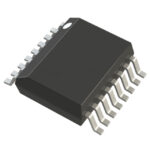 MAX3098EAEEE+
The activity of extra discounts on wholesale prices is in full swing…
Please fill in your contact information and we will send you the latest wholesale price list.






