 ChipApex | Global Electronic Components Supplier
SEARCH
Search Product
Search Post
— IC芯片 | 连接器 | 传感器 | 被动器件 —
Search productSearch post
— IC芯片 | 连接器 | 传感器 | 被动器件 —
Consult the customer manager about the wholesale price.
consultation hotline:86-132-6715-2157
email:[email protected]
Contact the product manager for consultation. One-stop consultation is available.
Do you want a lower wholesale price? Please send us your inquiry and we will reply immediately.
The MAX3109ETJ+ is an advanced dual universal asynchronous receiver-transmitter (UART) featuring 128-word receive and transmit FIFOs. It supports high-speed SPI or I2C controller interfaces with data rates up to 24Mbps using 2x and 4x rate modes. The device includes a phase-locked loop (PLL) and fractional baud-rate generators for flexible clock selection. Independent logic-level translation on transceiver and controller interfaces allows interfacing with microcontrollers, FPGAs, and transceivers powered by differing supply voltages. It operates from a 1.71V to 3.6V supply range and is specified over the -40°C to +85°C extended temperature range in a 32-pin TQFN package.
Verify component authenticity through authorized distributors or direct manufacturer channels. Confirm RoHS compliance status via official documentation. Ensure proper handling of ESD-sensitive components during storage and assembly. Check datasheet revisions for any updates to electrical characteristics or pin configurations before finalizing design implementations.
Select this component when system requirements include dual independent UARTs within a compact footprint. Consider its capability for bridging SPI/MICROWIRE or I2C buses to asynchronous interfaces like RS-485, RS-232, or IrDA. Evaluate power consumption constraints against shutdown and autosleep modes. Verify voltage compatibility across different logic domains using the integrated translation features.
The MAX3109 belongs to Maxim Integrated's family of serial communication controllers designed for embedded systems. It offers register compatibility with the MAX3107, MAX3108, and MAX14830, facilitating potential migration paths. The device integrates multiple functions into a single package to reduce board space and simplify system design for portable and industrial applications.
The MAX3107, MAX3108, and MAX14830 are documented as register-compatible alternatives. Verify pinout and feature parity before substitution. Ensure that specific interface requirements and power specifications align with the replacement part's capabilities.
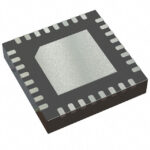 MAX3109ETJ+
The activity of extra discounts on wholesale prices is in full swing…
Please fill in your contact information and we will send you the latest wholesale price list.






