 ChipApex | Global Electronic Components Supplier
SEARCH
Search Product
Search Post
— IC芯片 | 连接器 | 传感器 | 被动器件 —
Search productSearch post
— IC芯片 | 连接器 | 传感器 | 被动器件 —
Consult the customer manager about the wholesale price.
consultation hotline:86-132-6715-2157
email:[email protected]
Contact the product manager for consultation. One-stop consultation is available.
Do you want a lower wholesale price? Please send us your inquiry and we will reply immediately.
The MAX3157CAI-T is a high CMRR RS-485/RS-422 data-communications interface providing ±50V isolation in a hybrid microcircuit. It contains one transmitter and one receiver, operating at data rates up to 250kbps with a typical supply current of 25mA. The device uses external ±50V capacitors to transfer power from the logic side to the isolated side, powered by a single +5V supply (4.75V to 5.25V). It features thermal shutdown for driver overload protection and independently programmable receiver and transmitter output phase. The CAI suffix indicates an industrial temperature range of 0°C to +70°C, housed in a 28-pin SSOP package.
Verify the specific ordering suffix 'T' corresponds to tape-and-reel packaging if required by assembly equipment. Confirm the 'CAI' designation matches the necessary 0°C to +70°C industrial temperature range for the target environment. Ensure the component is sourced from authorized distributors to guarantee authenticity and traceability, as this is a legacy Maxim Integrated product now under Analog Devices.
Select the MAX3157CAI-T when a low-cost replacement for opto-isolated transceivers is needed in systems requiring ±50V isolation. This part is suitable for applications where a single +5V supply must power both sides of the interface via charge-pump capacitors. Consider the 250kbps maximum data rate and the 28-pin SSOP footprint during PCB layout planning.
The MAX3157 belongs to the Maxim Integrated family of high CMRR RS-485 transceivers with isolation. The 'C' grade denotes the commercial/industrial temperature variant, while the 'E' grade covers extended temperatures. The 'I' suffix specifies the SSOP package type, distinct from the PDIP option. This component serves as a direct functional alternative to traditional optocoupler-based isolation schemes in RS-485 networks.
Refer to the MAX1480 family data sheet for fully integrated isolated RS-485/RS-422 transceivers that do not require external charge-pump capacitors. Verify compatibility with existing board space and capacitor requirements when substituting other isolated transceiver models.
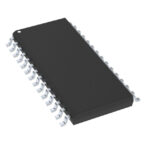 MAX3157CAI-T
The activity of extra discounts on wholesale prices is in full swing…
Please fill in your contact information and we will send you the latest wholesale price list.







