 ChipApex | Global Electronic Components Supplier
SEARCH
Search Product
Search Post
— IC芯片 | 连接器 | 传感器 | 被动器件 —
Search productSearch post
— IC芯片 | 连接器 | 传感器 | 被动器件 —
Consult the customer manager about the wholesale price.
consultation hotline:86-132-6715-2157
email:[email protected]
Contact the product manager for consultation. One-stop consultation is available.
Do you want a lower wholesale price? Please send us your inquiry and we will reply immediately.
The MAX3160EAP+ is a multiprotocol transceiver supporting RS-232, RS-485, and RS-422 standards. It operates on a single +3.0V to +5.5V supply using an internal dual charge pump. The device features pin-programmable configurations for two RS-232 drivers/receivers or a single RS-485/422 transceiver. It supports data rates up to 10Mbps in RS-485 mode and 1Mbps in RS-232 mode with slew-rate limiting disabled. Shutdown current is 1µA. Operating temperature range is -40°C to +85°C. Package: 20-pin SSOP.
Verify the 'E' suffix indicates the extended temperature range (-40°C to +85°C) and the 'AP+' suffix denotes the 20-pin SSOP package with lead-free/RoHS compliance. Confirm the specific ordering code matches the required protocol configuration and thermal specifications before procurement.
Select this component when space-constrained designs require both RS-232 and RS-485 interfaces on a single bus. Ensure the application utilizes the flow-through pinout for simplified layout. Verify that the 1µA shutdown current meets low-power requirements while maintaining active RS-232 receivers.
This part belongs to the MAX3160/MAX3161/MAX3162 family of multiprotocol transceivers. The MAX3160 specifically offers common transmitter outputs and receiver inputs for its RS-232 and RS-485/422 sections, optimizing it for multiprotocol operation on a single interface bus compared to the separate I/O options of other family members.
Public confirmed substitute part numbers are not available in the provided documentation.
Protocol selection is achieved via the RS485/RS232 control pin. A logic high configures the device for RS-485/422 operation, while a logic low configures it for RS-232 operation.
The FAST pin selects the slew rate. Driving it low enables slew-rate limiting for reduced EMI (up to 250kbps RS-485). Driving it high disables limiting, allowing speeds up to 10Mbps in RS-485 mode.
Yes. Asserting the HDPLX pin places the device in half-duplex mode, internally connecting the RS-485 receiver inputs to the driver outputs.
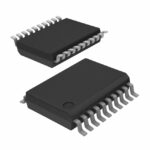 MAX3160EAP
The activity of extra discounts on wholesale prices is in full swing…
Please fill in your contact information and we will send you the latest wholesale price list.





