 ChipApex | Global Electronic Components Supplier
SEARCH
Search Product
Search Post
— IC芯片 | 连接器 | 传感器 | 被动器件 —
Search productSearch post
— IC芯片 | 连接器 | 传感器 | 被动器件 —
Consult the customer manager about the wholesale price.
consultation hotline:86-132-6715-2157
email:[email protected]
Contact the product manager for consultation. One-stop consultation is available.
Do you want a lower wholesale price? Please send us your inquiry and we will reply immediately.
The MAX3212CWI is a +2.7V to +3.6V-powered, true RS-232 transceiver featuring three drivers and five receivers in a 28-pin Wide SO package. It operates within an industrial temperature range of 0°C to +70°C. The device utilizes a proprietary AutoShutdown mode to reduce supply current to 1µA when valid signal levels are absent. It guarantees a data rate of 235kbps and meets EIA/TIA-232E and EIA/TIA-562 specifications. The internal switch-mode power supply generates ±6.5V from the single low-voltage input using external components.
Verify the specific suffix 'W' corresponds to the 28-pin Wide SO package and the 'C' indicates the 0°C to +70°C temperature range. Confirm that the ordering information matches the manufacturer's current datasheet revision, as component availability and exact pinout details should be cross-referenced with official documentation before integration into final designs.
Select this component for applications requiring low-voltage operation between 2.7V and 3.6V with significant power savings during idle periods. It is suitable for systems needing three transmit and five receive channels. Ensure the design accommodates the external inductor and diodes required for the charge pump. Verify compatibility with 5V logic families if interfacing directly with higher voltage digital circuits.
The MAX3212 belongs to Maxim Integrated's family of +3V-powered RS-232 transceivers designed for portable electronics. It distinguishes itself through the inclusion of AutoShutdown technology and guaranteed mouse driveability, addressing power constraints in battery-operated devices. The C-series variant specifically targets commercial temperature environments, offering a balance between performance and cost for standard consumer applications.
The MAX3243 serves as a compatible alternative within the same product family, offering similar functionality but operating from a 3.0V to 5.5V supply range. Designers must verify pinout compatibility and ensure the replacement supports the required voltage levels and interface standards for the specific application context.
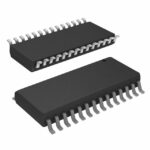 MAX3212CWI
The activity of extra discounts on wholesale prices is in full swing…
Please fill in your contact information and we will send you the latest wholesale price list.





