 ChipApex | Global Electronic Components Supplier
SEARCH
Search Product
Search Post
— IC芯片 | 连接器 | 传感器 | 被动器件 —
Search productSearch post
— IC芯片 | 连接器 | 传感器 | 被动器件 —
Consult the customer manager about the wholesale price.
consultation hotline:86-132-6715-2157
email:[email protected]
Contact the product manager for consultation. One-stop consultation is available.
Do you want a lower wholesale price? Please send us your inquiry and we will reply immediately.
The MAX3218CPP+ is a dual-driver, dual-receiver RS-232 transceiver designed for battery-powered EIA/TIA-232E and V.28/V.24 interfaces. It operates from a single +1.8V to +4.25V supply without external voltage regulators. The device features an AutoShutdown™ function that reduces supply current to 1µA when no valid signal is detected. It guarantees a data rate of 120kbps and maintains true RS-232 and EIA/TIA-562 voltage levels. The component is housed in a 20-pin Plastic DIP package and supports an operating temperature range of 0°C to +70°C.
Verify the specific ordering suffix to confirm the package type and temperature rating. The 'CPP' designation indicates a 20-pin Plastic DIP package with a commercial temperature range of 0°C to +70°C. Ensure the '+'' suffix is present to confirm lead-free and RoHS compliance status as defined in the manufacturer's ordering information.
Select this component for applications requiring low-power RS-232 communication directly from two alkaline, NiCd, or NiMH cells. It is suitable where system software cannot be modified to manage power states, as the AutoShutdown feature operates automatically based on receiver input signals. Verify that the load capacitance requirements align with the guaranteed 120kbps data rate specifications.
The MAX3218 belongs to Maxim Integrated's family of low-voltage RS-232 transceivers. It shares functional similarities with the MAX218 but offers extended supply voltage compatibility down to 1.8V. The device utilizes proprietary CMOS technology to achieve significantly lower quiescent currents compared to traditional bipolar RS-232 drivers.
MAX218: Similar functionality with AutoShutdown but limited to higher minimum supply voltages.
The device enters shutdown mode when it senses no valid RS-232 signal level on either receiver input for typically 30µs. This occurs if the cable is disconnected or peripheral transmitters are off.
Yes, during AutoShutdown, both receivers can remain active to monitor external devices, or they can be disabled under logic control via the FORCEON and FORCEOFF pins.
The circuit requires one 15µH inductor, one fast recovery diode (e.g., 1N6050), and three capacitors (C1=0.47µF, C2=1µF, C3=1µF) plus a bypass capacitor at VCC.
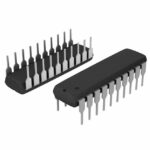 MAX3218CPP
The activity of extra discounts on wholesale prices is in full swing…
Please fill in your contact information and we will send you the latest wholesale price list.





