 ChipApex | Global Electronic Components Supplier
SEARCH
Search Product
Search Post
— IC芯片 | 连接器 | 传感器 | 被动器件 —
Search productSearch post
— IC芯片 | 连接器 | 传感器 | 被动器件 —
Consult the customer manager about the wholesale price.
consultation hotline:86-132-6715-2157
email:[email protected]
Contact the product manager for consultation. One-stop consultation is available.
Do you want a lower wholesale price? Please send us your inquiry and we will reply immediately.
The MAX3221CDBRG4 is a single-channel RS-232 line driver and receiver manufactured by Texas Instruments. It operates within a supply voltage range of 3 V to 5.5 V and supports data rates up to 250 kbps. The device features ±15-kV electrostatic discharge (ESD) protection on all RS-232 lines, ensuring robust performance in harsh environments. It incorporates an AutoShutdown feature that automatically reduces power consumption during idle periods or when the RS-232 bus is inactive. The component is housed in an 8-pin SOIC package and is designed for applications requiring low-power serial communication.
Verify the specific suffix 'G4' indicates lead-free and RoHS compliance status according to Texas Instruments documentation. Confirm the package type matches the required PCB footprint. Ensure the operating temperature range aligns with the intended application environment. Check for any specific ordering restrictions or minimum order quantities defined by authorized distributors.
Select this component when a single-channel RS-232 interface is sufficient for the design. Consider the MAX3221CDBRG4 for its low power consumption and high ESD protection capabilities. Evaluate the need for AutoShutdown functionality to extend battery life in portable applications. Compare pin compatibility and electrical characteristics with alternative single-channel RS-232 transceivers if space or cost constraints exist.
The MAX3221 series belongs to Texas Instruments' family of low-power RS-232 transceivers. These devices are designed to provide reliable serial communication in environments with limited power supplies. The MAX3221CDBRG4 variant specifically offers a single driver and receiver configuration, making it suitable for point-to-point communication links. Its integration of ESD protection simplifies system design by reducing the need for external protective components.
The SN75C3222 is a documented compatible replacement offering similar single-channel RS-232 functionality. Verify pinout compatibility and electrical specifications before substitution. Ensure the alternative component meets the same ESD protection and power consumption requirements as the original part.
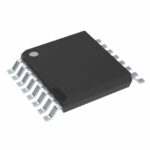 MAX3221CDBRG4
The activity of extra discounts on wholesale prices is in full swing…
Please fill in your contact information and we will send you the latest wholesale price list.





