 ChipApex | Global Electronic Components Supplier
SEARCH
Search Product
Search Post
— IC芯片 | 连接器 | 传感器 | 被动器件 —
Search productSearch post
— IC芯片 | 连接器 | 传感器 | 被动器件 —
Consult the customer manager about the wholesale price.
consultation hotline:86-132-6715-2157
email:[email protected]
Contact the product manager for consultation. One-stop consultation is available.
Do you want a lower wholesale price? Please send us your inquiry and we will reply immediately.
The MAX3225EAAP+ is a dual RS-232 transceiver from the MAX3224E–MAX3227E family, manufactured by Analog Devices Inc./Maxim Integrated. It operates on a single +3.0V to +5.5V supply and guarantees a data rate of 1Mbps. The device features AutoShutdown Plus technology, achieving a typical supply current of 1μA when inactive. It includes two drivers and two receivers with full-duplex communication capability. ESD protection is rated at ±15kV (Air-Gap), ±8kV (Contact), and ±15kV (Human Body Model). It is housed in a 20-pin SSOP package and supports an operating temperature range of -40°C to +125°C.
Verify the specific suffix 'AA' confirms the industrial extended temperature range (-40°C to +125°C) and SSOP package type. Confirm lead-free/RoHS compliance status associated with the '+' designation. Ensure the source documentation matches the exact part number for accurate pinout and electrical specification alignment.
Select this component for applications requiring true RS-232 performance from low-voltage supplies without external inductors. The 1Mbps data rate suits high-speed interfaces like ISDN modems. Verify that the 20-pin SSOP footprint fits the design constraints and that the -40°C to +125°C range meets environmental requirements.
This part belongs to the MAX3224E/MAX3225E/MAX3226E/MAX3227E series of 3V-powered RS-232 transceivers. It shares the AutoShutdown Plus feature and MegaBaud operation with siblings like the MAX3227E, differing primarily in driver/receiver counts and guaranteed data rates compared to the 250kbps MAX3224E.
Public confirmed substitutes include other members of the MAX3224E-MAX3227E family such as the MAX3227EEAP+ or MAX3225ECUP+, provided pin compatibility and specific data rate/temperature requirements are met.
It automatically shuts down the onboard charge pumps and disables transmitter outputs when no valid signal transition is detected on any receiver or transmitter input for more than 30 seconds, reducing supply current to 1μA.
The READY output asserts high when the internal charge pumps are regulating and the device has generated sufficient voltage to begin transmitting, indicating the transceiver is ready for use.
Operation requires four small 0.1μF capacitors connected to the charge pump terminals (C1+, C1-, C2+, C2-) to generate the necessary positive and negative voltages from the single VCC supply.
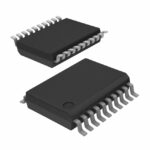 MAX3225EAAP+
The activity of extra discounts on wholesale prices is in full swing…
Please fill in your contact information and we will send you the latest wholesale price list.





