 ChipApex | Global Electronic Components Supplier
SEARCH
Search Product
Search Post
— IC芯片 | 连接器 | 传感器 | 被动器件 —
Search productSearch post
— IC芯片 | 连接器 | 传感器 | 被动器件 —
Consult the customer manager about the wholesale price.
consultation hotline:86-132-6715-2157
email:[email protected]
Contact the product manager for consultation. One-stop consultation is available.
Do you want a lower wholesale price? Please send us your inquiry and we will reply immediately.
The MAX3232CDWG4 is a dual-channel RS-232 line driver and receiver manufactured by Texas Instruments. It operates from a single 3 V to 5.5 V power supply, utilizing an internal charge pump to generate the required voltages for RS-232 signaling without external inductors. The device features two drivers and two receivers, supporting full-duplex communication at data rates up to 250 kbps. It is housed in a 16-pin SOIC-Wide (DW) package with a wide body. The component is rated for an industrial temperature range of -40°C to +85°C and includes ±15 kV electrostatic discharge (ESD) protection on all RS-232 lines.
Verify the specific suffix 'G4' indicates lead-free and RoHS compliance status as per Texas Instruments documentation. Confirm the 'C' designation corresponds to the commercial-to-industrial temperature grade (-40°C to +85°C). Ensure the DW package variant matches the required PCB footprint dimensions for the wide SOIC-16 form factor before finalizing procurement orders.
Select this component when a dual-channel RS-232 transceiver is needed for space-constrained designs using surface-mount technology. The wide-body SOIC package facilitates easier manual soldering compared to smaller footprints. Consider the 250 kbps speed limit and 1 mA typical supply current when evaluating power budgets for portable applications requiring long cable runs or noisy environments.
This part belongs to the MAX3232 family of multichannel RS-232 transceivers designed for low-power, single-supply applications. The MAX3232 series is widely used as a drop-in replacement for older RS-232 drivers due to its compatibility with standard timing requirements. The 'G4' suffix typically denotes environmental compliance, while 'CD' specifies the package type and temperature range within the broader product line.
The SN75C3232 is a pin-compatible alternative offering similar functionality. Other compatible devices include the MAX3232IDW and MAX3232EIDW, which share the same package but may differ in temperature ratings or ESD protection levels. Verify electrical specifications against the original design requirements before substituting.
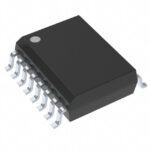 MAX3232CDWG4
The activity of extra discounts on wholesale prices is in full swing…
Please fill in your contact information and we will send you the latest wholesale price list.





