 ChipApex | Global Electronic Components Supplier
SEARCH
Search Product
Search Post
— IC芯片 | 连接器 | 传感器 | 被动器件 —
Search productSearch post
— IC芯片 | 连接器 | 传感器 | 被动器件 —
Consult the customer manager about the wholesale price.
consultation hotline:86-132-6715-2157
email:[email protected]
Contact the product manager for consultation. One-stop consultation is available.
Do you want a lower wholesale price? Please send us your inquiry and we will reply immediately.
The MAX3232CDWR is a dual transmitter and receiver RS-232 transceiver manufactured by Texas Instruments. It operates on a single 3 V to 5.5 V power supply, utilizing an internal charge pump to generate the required voltage levels for RS-232 communication. The device supports data rates up to 250 kbps and features full-duplex operation with two drivers and two receivers. It includes ±15 kV electrostatic discharge (ESD) protection on all RS-232 lines. The component is housed in a 16-pin SOIC package and is designed for surface-mount installation.
Verify the specific suffix 'CDWR' corresponds to the commercial temperature range and tape-and-reel packaging format. Confirm that the SOIC-16 footprint matches the target PCB design. Ensure compliance with RoHS directives if required by the end product specifications. Cross-reference the manufacturer's latest datasheet for any pinout revisions or recommended external capacitor values.
Select this component when a dual-channel RS-232 interface is required for commercial-grade applications. It is suitable for designs operating between 0°C and +70°C. Consider alternative packages such as SSOP or TSSOP if space constraints differ. Verify that the 250 kbps data rate meets the system's throughput requirements compared to higher-speed alternatives like the MAX3243.
This part belongs to the MAX3232 family of multichannel RS-232 line drivers and receivers. The family offers various package options including PDIP, SOIC, SSOP, and TSSOP. Variants differ primarily in temperature ranges, packaging styles, and ESD protection levels. The CDWR designation specifically indicates the SOIC-16 package variant intended for surface-mount technology assembly.
Direct functional substitutes include other MAX3232 variants with different packages, such as MAX3232IDWR (industrial temperature range) or MAX3232CDBR (SSOP package). For higher performance, the MAX3243 series provides increased data rates and additional channels but requires software configuration changes.
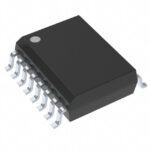 MAX3232CDWR
The activity of extra discounts on wholesale prices is in full swing…
Please fill in your contact information and we will send you the latest wholesale price list.





