 ChipApex | Global Electronic Components Supplier
SEARCH
Search Product
Search Post
— IC芯片 | 连接器 | 传感器 | 被动器件 —
Search productSearch post
— IC芯片 | 连接器 | 传感器 | 被动器件 —
Consult the customer manager about the wholesale price.
consultation hotline:86-132-6715-2157
email:[email protected]
Contact the product manager for consultation. One-stop consultation is available.
Do you want a lower wholesale price? Please send us your inquiry and we will reply immediately.
The MAX3237ECDB is a true RS-232 transceiver manufactured by Texas Instruments, designed for operation with supply voltages ranging from 3 V to 5.5 V. It integrates five drivers and three receivers in a single package, supporting full-duplex communication at data rates up to 1 Mb/s. The device operates within an industrial temperature range of 0°C to +70°C and features low power consumption with a typical operating supply current of 2 mA. It includes a shutdown mode to minimize power usage during idle periods. The component provides robust protection against electrostatic discharge (ESD) with ratings up to 15 kV, ensuring reliable performance in demanding environments.
Verify the exact suffix 'DB' corresponds to the TSSOP-28 package variant when sourcing. Confirm RoHS compliance status through official manufacturer documentation or authorized distributors. Ensure the ordering part number matches the specific temperature grade and packaging format required for your assembly process. Cross-reference with Texas Instruments datasheets to validate pinout compatibility.
Select this component when designing circuits that require five transmit channels and three receive channels on a single IC. It is suitable for applications needing 3V to 5.5V operation without external charge pumps. Consider the TSSOP-28 package constraints for PCB layout. Compare against similar MAX3237 variants if different package types or extended temperature ranges are needed.
This device belongs to the MAX3237E family of true RS-232 transceivers from Texas Instruments. The family shares core electrical characteristics but differs in packaging options such as SOIC, SSOP, and TSSOP. The ECDB designation specifically identifies the commercial temperature grade and surface-mount TSSOP-28 form factor within this product line.
Direct substitutes include other MAX3237E variants with different packages like MAX3237ECDW or MAX3237ECPWR. Verify pin-to-pin compatibility before replacement. Alternative interfaces may require checking driver/receiver counts and voltage levels.
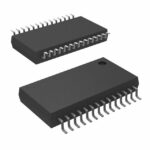 MAX3237ECDB
The activity of extra discounts on wholesale prices is in full swing…
Please fill in your contact information and we will send you the latest wholesale price list.





