 ChipApex | Global Electronic Components Supplier
SEARCH
Search Product
Search Post
— IC芯片 | 连接器 | 传感器 | 被动器件 —
Search productSearch post
— IC芯片 | 连接器 | 传感器 | 被动器件 —
Consult the customer manager about the wholesale price.
consultation hotline:86-132-6715-2157
email:[email protected]
Contact the product manager for consultation. One-stop consultation is available.
Do you want a lower wholesale price? Please send us your inquiry and we will reply immediately.
The MAX3243EIPWRE4 is a multichannel RS-232 line driver and receiver manufactured by Texas Instruments. It operates on a single 3-V to 5.5-V supply and integrates three drivers and five receivers within a 28-pin TSSOP package. The device supports data rates up to 500 kb/s and features full-duplex communication capability. It includes an integrated charge pump circuit requiring only four small external capacitors. Key electrical specifications include a typical operating supply current of 1 mA and propagation delay of 0.15 µs. The component provides ±15-kV electrostatic discharge (ESD) protection on RS-232 bus pins, ensuring robust performance in industrial environments.
Verify the specific suffix RE4 indicates tape and reel packaging configuration distinct from tube variants. Confirm RoHS compliance status through official manufacturer documentation prior to integration. Ensure the ordering part number matches the required temperature grade and package type for the target application design constraints.
Select this component when designing systems requiring multiple RS-232 channels with low standby power consumption. The TSSOP-28 package offers a compact footprint suitable for space-constrained PCB layouts. Verify that the 500 kb/s data rate meets the throughput requirements of the connected asynchronous controllers and serial peripherals.
This part belongs to the MAX3243 family of multichannel RS-232 transceivers designed for IBM PC/AT compatible serial ports. The E variant denotes extended temperature performance capabilities compared to standard commercial grades. The IPWR suffix identifies the specific TSSOP package style and reel packaging format used for surface-mount assembly processes.
MAX3243EIDBR: SSOP-28 package variant with identical electrical characteristics. MAX3243EIDWRG4: SOIC-28 package alternative maintaining the same functional pinout and performance metrics. MAX3243CDBRE4: Commercial grade version with limited temperature range compared to the extended grade E variant.
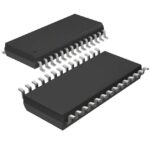 MAX3243EIPWRE4
The activity of extra discounts on wholesale prices is in full swing…
Please fill in your contact information and we will send you the latest wholesale price list.





