 ChipApex | Global Electronic Components Supplier
SEARCH
Search Product
Search Post
— IC芯片 | 连接器 | 传感器 | 被动器件 —
Search productSearch post
— IC芯片 | 连接器 | 传感器 | 被动器件 —
Consult the customer manager about the wholesale price.
consultation hotline:86-132-6715-2157
email:[email protected]
Contact the product manager for consultation. One-stop consultation is available.
Do you want a lower wholesale price? Please send us your inquiry and we will reply immediately.
The MAX3265EUE+D is a limiting amplifier manufactured by Analog Devices Inc./Maxim Integrated, designed for Gigabit Ethernet and Fibre Channel optical receiver systems. It operates within a supply voltage range of +3.0V to +5.5V and supports data rates up to 2.5Gbps. The device is housed in a TSSOP-16 package with an exposed pad, measuring 4.40mm in width. It functions as a single-channel amplifier accepting wide input voltage ranges and providing constant-level output voltages with controlled edge speeds. The component operates across a temperature range of -40°C to +85°C.
Verify the exact suffix 'D' against official manufacturer documentation, as standard listings typically use 'T' for tape-and-reel or no suffix for tubes. Confirm availability status directly with authorized distributors, as stock levels fluctuate. Ensure the ordering part number matches the specific package variant required for your PCB layout. Cross-reference the datasheet revision to confirm pinout compatibility before procurement.
Select this component when designing optical receivers requiring 2.5Gbps performance. It is suitable for applications needing wide input voltage tolerance and controlled signal edges. Consider the TSSOP-16 package constraints and thermal requirements due to the exposed pad. Verify that the system power supply remains within the 3.0V to 5.5V operating range for optimal performance.
This device belongs to the MAX3264/MAX3265/MAX3268/MAX3269 family of limiting amplifiers from Maxim Integrated. These components are engineered for high-speed serial communication interfaces. The MAX3265 variant specifically targets 2.5Gbps applications, distinguishing it from the 1.25Gbps variants in the same series. They share common design features like RMS power detectors and programmable loss-of-signal indications.
Public confirmed substitute part numbers: MAX3264EUE+, MAX3268CUB+, MAX3269EUE+. Note that these substitutes may differ in data rate (1.25Gbps vs 2.5Gbps) or package type (TSSOP vs UMAX). Verify electrical specifications and pinout compatibility before substitution.
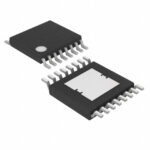 MAX3265EUE+D
The activity of extra discounts on wholesale prices is in full swing…
Please fill in your contact information and we will send you the latest wholesale price list.







