 ChipApex | Global Electronic Components Supplier
SEARCH
Search Product
Search Post
— IC芯片 | 连接器 | 传感器 | 被动器件 —
Search productSearch post
— IC芯片 | 连接器 | 传感器 | 被动器件 —
Consult the customer manager about the wholesale price.
consultation hotline:86-132-6715-2157
email:[email protected]
Contact the product manager for consultation. One-stop consultation is available.
Do you want a lower wholesale price? Please send us your inquiry and we will reply immediately.
The MAX3291ESD is a full-duplex RS-485/RS-422 transceiver featuring driver preemphasis to reduce intersymbol interference. It operates from a single +5V supply with a typical no-load current of 3mA and 100nA in shutdown mode. The device supports data rates up to 10Mbps, allows up to 128 transceivers on the bus via 1/4-unit-load impedance, and includes short-circuit current limiting. It is housed in a 14-pin SOIC package and specified for an operating temperature range of 0°C to +70°C.
Verify the specific suffix 'ESD' corresponds to the commercial temperature grade (0°C to +70°C) and SOIC package variant required for your design. Confirm that the ordering information matches the exact pinout and electrical specifications listed in the official datasheet before finalizing procurement orders.
Select this component when designing for high-speed serial communication over extended cable lengths where signal integrity is critical. The integrated preemphasis feature specifically addresses inter-symbol interference, making it suitable for applications requiring data rates between 5Mbps and 10Mbps without external equalization components.
This part belongs to the MAX3291/MAX3292 family of high-speed RS-485/RS-422 transceivers. The MAX3291 variant features a fixed internal preemphasis interval optimized for 5Mbps to 10Mbps operation, whereas the MAX3292 offers programmable preemphasis via an external resistor.
The datasheet lists the following parts as pin-compatible alternatives: ’75180, MAX489, MAX491, MAX3080, MAX3083, MAX3086, and MAX1482. Verify that substitute devices support the required data rates and preemphasis functionality if applicable.
It utilizes driver preemphasis circuitry which increases the signal amplitude at every transition edge for approximately one baud period, counteracting the effects of cable RC time constants.
The device features a 1/4-unit-load receiver input impedance, allowing up to 128 transceivers to be connected in parallel on one communication line.
Shutdown is initiated by driving the Receiver Enable (RE) pin high and the Driver Enable (DE) pin low simultaneously.
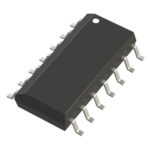 MAX3291ESD
The activity of extra discounts on wholesale prices is in full swing…
Please fill in your contact information and we will send you the latest wholesale price list.





