 ChipApex | Global Electronic Components Supplier
SEARCH
Search Product
Search Post
— IC芯片 | 连接器 | 传感器 | 被动器件 —
Search productSearch post
— IC芯片 | 连接器 | 传感器 | 被动器件 —
Consult the customer manager about the wholesale price.
consultation hotline:86-132-6715-2157
email:[email protected]
Contact the product manager for consultation. One-stop consultation is available.
Do you want a lower wholesale price? Please send us your inquiry and we will reply immediately.
The MAX3291ESD+T is a full-duplex RS-485/RS-422 transceiver featuring driver preemphasis to reduce intersymbol interference. It operates from a single +5V supply with a typical no-load current of 3mA and 100nA in shutdown mode. The device supports data rates up to 10Mbps, offers a -7V to +12V common-mode input range, and allows up to 128 transceivers on the bus due to its 1/4-unit-load receiver impedance. It includes short-circuit current limiting and fail-safe inputs. Available in SOIC-14 packages, it functions within an industrial temperature range of -40°C to +85°C.
Verify the component against official Analog Devices documentation to confirm pinout compatibility and electrical specifications. Ensure the operating environment remains within the specified voltage and temperature limits. Cross-reference the datasheet revision to validate performance characteristics before final integration into hardware designs.
Select this component for applications requiring extended cable lengths or higher data rates where standard transceivers suffer from signal degradation. The fixed preemphasis interval suits designs needing industry-standard pin compatibility without external programming components. Verify that the system power supply noise is minimized to ensure preemphasis functionality at lower data rates.
This part belongs to the MAX3291/MAX3292 family of high-speed RS-485/RS-422 transceivers. It is designed as a drop-in replacement for legacy devices like the '75180, offering enhanced performance through integrated preemphasis technology. The ESD suffix indicates an extended industrial temperature rating compared to commercial variants.
Pin-compatible replacements include the MAX489, MAX491, MAX3080, MAX3083, MAX3086, and MAX1482. Note that these alternatives may lack the specific preemphasis features of the MAX3291, potentially affecting maximum cable length or data rate capabilities in existing designs.
It utilizes driver preemphasis circuitry to increase signal amplitude at transition edges, counteracting the RC time constant effects of long cables and reducing jitter.
The receiver input impedance is 1/4-unit-load (48kΩ), allowing up to 128 transceivers to be connected on a single communication line.
Shutdown is initiated by driving the Receiver Enable (RE) pin high and the Driver Enable (DE) pin low simultaneously.
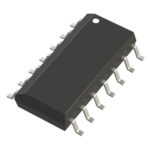 MAX3291ESD+T
The activity of extra discounts on wholesale prices is in full swing…
Please fill in your contact information and we will send you the latest wholesale price list.





