 ChipApex | Global Electronic Components Supplier
SEARCH
Search Product
Search Post
— IC芯片 | 连接器 | 传感器 | 被动器件 —
Search productSearch post
— IC芯片 | 连接器 | 传感器 | 被动器件 —
Consult the customer manager about the wholesale price.
consultation hotline:86-132-6715-2157
email:[email protected]
Contact the product manager for consultation. One-stop consultation is available.
Do you want a lower wholesale price? Please send us your inquiry and we will reply immediately.
The MAX33011EASA+ is a +5V, high-speed CAN transceiver housed in an 8-pin SOIC package. It supports data rates up to 5Mbps and operates within a supply voltage range of 4.5V to 5.5V on VDD. The device features ±65V fault protection on the CANH and CANL lines, along with ±25V extended common-mode input range (CMR). It provides ±45kV ESD protection via the Human Body Model. The component includes a dedicated FAULT pin for reporting overcurrent, overvoltage, and transmission failures. It incorporates a dominant timeout mechanism to prevent bus lockup and supports silent mode operation.
Verify the specific ordering suffix to confirm the package type and RoHS compliance status. Ensure the logic supply requirements match the target microcontroller interface. Confirm that the selected variant supports the necessary control pins such as Silent Mode or Standby. Cross-reference the datasheet revision date to ensure compatibility with current design specifications.
Select this component when robust fault protection and diagnostic reporting are required for CAN networks. The 8-pin SOIC package suits standard surface-mount layouts. Verify that the application environment stays within the -40°C to +125°C operating temperature range. Consider the silent mode feature if transmitter disabling is needed for network management.
The MAX33011EASA+ belongs to the MAX33011E-MAX33015E family of +5V CAN transceivers. This family shares core electrical characteristics but differs in available control features and packaging options. Other members include variants with standby modes or loopback capabilities in different form factors.
Direct replacements within the same family include the MAX33012EASA+, which offers a standby mode instead of silent mode. Both devices share the 8-pin SOIC package and identical electrical specifications regarding fault protection and data rates.
The device includes a transmitter-dominant timeout feature. If the TXD input remains in the dominant state for longer than the specified timeout period, the driver switches to the recessive state to release the bus.
The S pin enables Silent Mode. Driving this pin high disables the transmitter regardless of the TXD level, allowing the receiver to monitor the bus without transmitting.
After a fault occurs, the FAULT pin goes high. To clear the condition, the system must clock out the 6-bit fault code through the RXD pin using 10 clock pulses on the TXD pin.
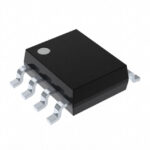 MAX33011EASA+
The activity of extra discounts on wholesale prices is in full swing…
Please fill in your contact information and we will send you the latest wholesale price list.







