ChipApex | Global Electronic Components Supplier
SEARCH
Search Product
Search Post
— IC芯片 | 连接器 | 传感器 | 被动器件 —
Search productSearch post
— IC芯片 | 连接器 | 传感器 | 被动器件 —
Consult the customer manager about the wholesale price.
consultation hotline:86-132-6715-2157
email:[email protected]
Contact the product manager for consultation. One-stop consultation is available.
Do you want a lower wholesale price? Please send us your inquiry and we will reply immediately.
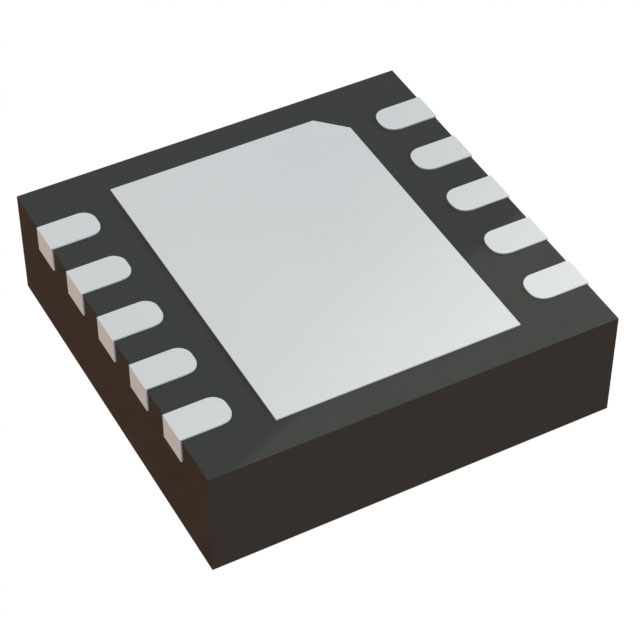
The MAX33014EATB+ is a +5V, 5Mbps CAN transceiver in a 10-pin TDFN-EP package. It features ±65V fault protection on CANH and CANL, ±45kV ESD HBM protection, and a ±25V common-mode input range. The device includes a STBY pin for low-current standby mode and an LPBK pin for loopback diagnostics. A separate VL logic supply supports voltages from 1.62V to VDD. Fault detection monitors overcurrent, overvoltage, and transmission failure, reporting codes via RXD. Operating temperature ranges from -40°C to +125°C.
Verify the specific ordering suffix ATB+ corresponds to the 10-pin TDFN-EP package configuration. Confirm RoHS compliance status as indicated by the plus sign in the part number. Ensure the design accommodates the required thermal dissipation characteristics for the TDFN package under maximum operating conditions.
Select this component when a 10-pin surface-mount package is preferred over the standard 8-pin SOIC option within the MAX3301x family. The inclusion of the LPBK pin enables local controller self-diagnostic testing without disturbing the bus. The dedicated VL pin allows direct interfacing with low-voltage microcontrollers without external level shifters.
This device belongs to the MAX33011E through MAX33015E family of +5V CAN transceivers designed for harsh industrial environments. While sharing core fault protection and speed specifications with siblings like the MAX33012E, the MAX33014E specifically integrates the STBY and LPBK control pins in a compact TDFN footprint.
MAX33012EASA+ (8-pin SOIC variant with STBY)
If the TXD input remains in the dominant state (low) for longer than the specified tDOM period, the driver switches to the recessive state to prevent bus lockup caused by controller errors.
Connecting the LPBK pin to logic-high places the transceiver in a high-impedance state to the bus while internally routing TXD to RXD, enabling remote self-diagnostics without disturbing the network.
Upon detecting a fault such as overcurrent or overvoltage, the FAULT pin goes high. A 6-bit fault code is then clocked out through the RXD line after 16 low-to-high transitions occur on the TXD pin.
 MAX33014EATB+
The activity of extra discounts on wholesale prices is in full swing…
Please fill in your contact information and we will send you the latest wholesale price list.