 ChipApex | Global Electronic Components Supplier
SEARCH
Search Product
Search Post
— IC芯片 | 连接器 | 传感器 | 被动器件 —
Search productSearch post
— IC芯片 | 连接器 | 传感器 | 被动器件 —
Consult the customer manager about the wholesale price.
consultation hotline:86-132-6715-2157
email:[email protected]
Contact the product manager for consultation. One-stop consultation is available.
Do you want a lower wholesale price? Please send us your inquiry and we will reply immediately.
The MAX3302EEWA+T is a fully integrated USB On-the-Go (OTG) transceiver and charge pump manufactured by Analog Devices Inc./Maxim Integrated. It operates with a VCC supply voltage range of +3V to +4.5V and supports logic supply voltages from +1.65V to +3.6V. The device integrates an I2C-compatible serial interface, internal level shifters, and built-in ±15kV ESD protection on the VBUS, ID_IN, D+, and D- terminals. It supports USB OTG session-request protocol (SRP) and host-negotiation protocol (HNP). The component is housed in a 25-bump WLP package and operates over an extended temperature range of -40°C to +85°C.
Verify the specific ordering suffix '+T' corresponds to tape-and-reel packaging when sourcing this component. Confirm the manufacturer designation as Analog Devices Inc./Maxim Integrated to ensure authenticity. Check for lead-free compliance status associated with the '+' suffix. Validate the package type as 25-bump WLP against your assembly requirements. Ensure the part number matches the exact electrical specifications required for your design.
Select the MAX3302EEWA+T for applications requiring dual-role USB connectivity in space-constrained portable electronics. This model powers up in operational mode, facilitating boot-up sequences without immediate I2C configuration. Compare it against the MAX3301E variant if a shutdown power-up state is preferred. Ensure the system logic voltage falls within the +1.65V to +3.6V range for proper level shifting compatibility.
This component belongs to the MAX3301E/MAX3302E family of USB On-the-Go transceivers. The MAX3302E specifically differs from the MAX3301E by powering up in the operational VP/VM USB mode rather than shutdown. Both devices share identical core functionalities, including the integrated charge pump and transceiver capabilities, but differ in their initial power-on states and I2C address configurations.
The MAX3301EEWA+T is a functional alternative within the same family, differing primarily in its power-up state (shutdown vs. operational). Verify that the system firmware can handle the initialization sequence required by the selected replacement variant. Ensure pinout and package dimensions remain compatible with the existing PCB layout.
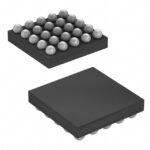 MAX3302EEWA+T
The activity of extra discounts on wholesale prices is in full swing…
Please fill in your contact information and we will send you the latest wholesale price list.





