 ChipApex | Global Electronic Components Supplier
SEARCH
Search Product
Search Post
— IC芯片 | 连接器 | 传感器 | 被动器件 —
Search productSearch post
— IC芯片 | 连接器 | 传感器 | 被动器件 —
Consult the customer manager about the wholesale price.
consultation hotline:86-132-6715-2157
email:[email protected]
Contact the product manager for consultation. One-stop consultation is available.
Do you want a lower wholesale price? Please send us your inquiry and we will reply immediately.
The MAX3314EEUA+T is a single-channel RS-232 transceiver from Analog Devices Inc./Maxim Integrated, housed in an 8-pin µMAX package. It operates with external +5V and -5V supplies to generate EIA/TIA-232-compatible ±3.7V output levels. The device supports data rates up to 460kbps while driving loads of 3kΩ and 1000pF. It features a shutdown mode that reduces supply current to 1µA by disabling the transmitter into tristate while keeping the receiver active. The component provides robust ESD protection rated at ±15kV (Human Body Model) and ±8kV (IEC Contact Discharge). Operating temperature range is -40°C to +85°C.
Verify the specific ordering suffix EEUA+T corresponds to the -40°C to +85°C temperature range and 8-pin µMAX package. Confirm the datasheet revision matches the requested specifications. Ensure compatibility with existing board layouts for the µMAX footprint. Check for RoHS compliance status indicated by the plus sign in the part number. Validate supplier authenticity through authorized distribution channels.
Select this component when a single-channel RS-232 interface is required with low power consumption needs. The 460kbps data rate suits moderate-speed serial communications. The integrated ESD protection simplifies design for portable devices exposed to handling stress. Verify that external +5V and -5V charge pumps are available in the system design. Consider the µMAX package size constraints against available PCB real estate.
This part belongs to the MAX3314E family of RS-232 transceivers. Other variants include SOT23 and SO packages with different temperature ranges. The 'E' suffix denotes the extended temperature range (-40°C to +85°C). The 'U' indicates the µMAX package type. The '+T' typically signifies tape and reel packaging. This series offers a balance of performance and power efficiency for embedded serial communication applications.
Direct substitutes include other MAX3314E variants with different packages or temperature ratings. Cross-reference pinouts and electrical characteristics carefully. Ensure replacement parts maintain the same ESD protection levels and data rate capabilities. Verify voltage supply requirements match the existing design constraints.
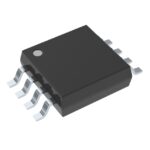 MAX3314EEUA+T
The activity of extra discounts on wholesale prices is in full swing…
Please fill in your contact information and we will send you the latest wholesale price list.





