 ChipApex | Global Electronic Components Supplier
SEARCH
Search Product
Search Post
— IC芯片 | 连接器 | 传感器 | 被动器件 —
Search productSearch post
— IC芯片 | 连接器 | 传感器 | 被动器件 —
Consult the customer manager about the wholesale price.
consultation hotline:86-132-6715-2157
email:[email protected]
Contact the product manager for consultation. One-stop consultation is available.
Do you want a lower wholesale price? Please send us your inquiry and we will reply immediately.
The MAX3320TEAP+ is a true RS-232 transceiver integrated with a microprocessor power-on reset circuit, operating from a single +3V to +5.5V supply. It features two drivers and two receivers supporting data rates up to 250kbps. The device utilizes AutoShutdown Plus technology to achieve a low shutdown supply current of 4µA. It includes an active-low RESET output guaranteed valid down to VCC = 1V, with a minimum pulse width of 100ms. The 'T' suffix indicates a 3.08V reset threshold. Packaged in a 20-pin SSOP, it requires four 0.1µF external capacitors for its dual charge pumps.
Verify the specific ordering suffix against the datasheet table to confirm the reset threshold voltage. The 'T' suffix corresponds to a 3.08V threshold. Ensure the component matches the required temperature range for the application environment. Cross-reference the manufacturer's latest documentation to confirm availability status and any potential obsolescence notices before finalizing procurement plans.
Select this component when a combined RS-232 interface and power supervision are required in space-constrained designs. The 3.08V reset threshold suits systems where the supply rail stabilizes near 3.3V. Verify that the 250kbps maximum data rate meets the communication requirements. Confirm that the 20-pin SSOP package dimensions fit the PCB layout constraints and thermal management needs.
This part belongs to the MAX3320A/B/L/T family of low-power RS-232 transceivers. The family differentiates parts primarily by the internal reset threshold voltage, selected via the ordering suffix. All variants share identical electrical characteristics regarding the transceiver functionality, including the 250kbps data rate and 4µA shutdown current. The MAX3320EAP variant offers an extended industrial temperature range compared to the commercial grade.
The MAX3320ACAP+ serves as a direct functional substitute with a different reset threshold (4.25V). Other members of the MAX3320 family (MAX3320BCAP+, MAX3320LCAP+) offer alternative thresholds while maintaining the same pinout and transceiver specifications.
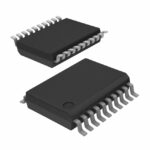 MAX3320TEAP+
The activity of extra discounts on wholesale prices is in full swing…
Please fill in your contact information and we will send you the latest wholesale price list.





