 ChipApex | Global Electronic Components Supplier
SEARCH
Search Product
Search Post
— IC芯片 | 连接器 | 传感器 | 被动器件 —
Search productSearch post
— IC芯片 | 连接器 | 传感器 | 被动器件 —
Consult the customer manager about the wholesale price.
consultation hotline:86-132-6715-2157
email:[email protected]
Contact the product manager for consultation. One-stop consultation is available.
Do you want a lower wholesale price? Please send us your inquiry and we will reply immediately.
The MAX3388EEUG+ is a 2.5V-powered RS-232 transceiver in a 24-pin TSSOP package, designed for portable electronics. It features two receivers and three transmitters with guaranteed data rates up to 460kbps. The device operates from a +2.35V to +3.0V supply and includes an internal dual charge pump requiring only four 0.1µF capacitors. It provides ±15kV ESD protection on all RS-232 I/O pins and offers a dedicated VL pin for mixed-voltage logic compatibility. Supply current is typically 300µA, dropping to 1µA in shutdown mode.
Verify the component against official Analog Devices documentation to confirm the specific EEUG suffix indicates the extended temperature range variant. Ensure that the ordering information matches the required thermal specifications for the intended deployment environment before finalizing procurement decisions.
Select this component when designing battery-operated devices requiring high-speed RS-232 communication at low voltages. The integrated charge pump reduces board space compared to discrete solutions. Verify that the system logic levels align with the VL pin requirements to ensure proper signal translation between the microcontroller and the serial interface.
This part belongs to the Maxim Integrated MAX3388E/MAX3389E family of low-power RS-232 transceivers. The MAX3388E variant lacks the active LOUT pin during shutdown found in the MAX3389E. Both share identical electrical characteristics for standard serial communication but differ slightly in handshaking functionality during low-power states.
Public confirmed substitute part numbers are not available in the provided documentation.
The VL pin serves as a separate logic supply input that sets the output voltage thresholds for receiver outputs and transmitter inputs, allowing compatibility with logic levels as low as 1.8V.
The device guarantees a data rate of 460kbps under specified load conditions of 3kΩ in parallel with 150pF.
Yes, asserting the SHDN pin low places the device in shutdown mode, reducing supply current to less than 1µA and disabling the charge pumps and transmitter outputs.
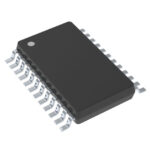 MAX3388EEUG
The activity of extra discounts on wholesale prices is in full swing…
Please fill in your contact information and we will send you the latest wholesale price list.





