 ChipApex | Global Electronic Components Supplier
SEARCH
Search Product
Search Post
— IC芯片 | 连接器 | 传感器 | 被动器件 —
Search productSearch post
— IC芯片 | 连接器 | 传感器 | 被动器件 —
Consult the customer manager about the wholesale price.
consultation hotline:86-132-6715-2157
email:[email protected]
Contact the product manager for consultation. One-stop consultation is available.
Do you want a lower wholesale price? Please send us your inquiry and we will reply immediately.
The MAX3440EASA+ is a fault-protected RS-485 transceiver manufactured by Analog Devices Inc./Maxim Integrated. It operates from a single +5V supply (4.75V to 5.25V) and supports data rates up to 10Mbps with enhanced slew-rate limiting. The device features ±60V fault protection on the A and B pins, ±15kV ESD protection, and true fail-safe receiver inputs that guarantee a logic-high output when inputs are open or shorted. It includes hot-swap circuitry for telecom applications and allows up to 128 transceivers on a single bus due to its 1/4-unit-load input impedance. The component is housed in an 8-pin SO package and is specified over an automotive temperature range of -40°C to +125°C.
Verify the specific suffix 'A' indicates the extended automotive temperature range (-40°C to +125°C). Confirm the 'SO' designation corresponds to the 8-pin Small Outline package. Ensure the '+' suffix confirms lead-free and RoHS compliance status as per manufacturer specifications.
Select this model for systems requiring robust fault tolerance against high-voltage bus errors. The enhanced slew-rate limiting makes it suitable for reducing electromagnetic interference in noisy industrial environments. Verify compatibility with existing 5V logic levels and ensure the application benefits from the integrated thermal shutdown and current-limiting protections.
This component belongs to the MAX3440E–MAX3444E family of fault-protected transceivers. While sharing core functionalities like ±60V protection and fail-safe inputs, variants within the series differ in data rate capabilities and control pin configurations. The MAX3440E specifically integrates reduced slew-rate drivers to minimize signal reflections.
MAX3440EESA+
The MAX3440EASA+ utilizes true fail-safe receiver inputs with a differential threshold of -50mV to -200mV. This guarantees a logic-high output at RO when the A and B inputs are open, shorted together, or connected to an idle terminated line.
The FAULT pin provides a digital indication of bus faults. It goes high if the differential voltage between A and B drops below 200mV, if A or B shorts to a voltage outside the -7V to +12V common-mode range, or if A/B shorts to each other while the driver is enabled.
Yes, the device includes hot-swap circuitry on the DE and RE control pins. This prevents false transitions on the data bus during circuit initialization or connection to a live backplane by holding the driver disabled until power-up sequences complete.
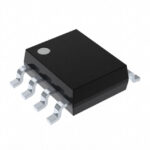 MAX3440EASA+
The activity of extra discounts on wholesale prices is in full swing…
Please fill in your contact information and we will send you the latest wholesale price list.





