 ChipApex | Global Electronic Components Supplier
SEARCH
Search Product
Search Post
— IC芯片 | 连接器 | 传感器 | 被动器件 —
Search productSearch post
— IC芯片 | 连接器 | 传感器 | 被动器件 —
Consult the customer manager about the wholesale price.
consultation hotline:86-132-6715-2157
email:[email protected]
Contact the product manager for consultation. One-stop consultation is available.
Do you want a lower wholesale price? Please send us your inquiry and we will reply immediately.
The MAX3488EESA+T is a full-duplex transceiver for RS-422 and RS-485 communications, manufactured by Analog Devices Inc./Maxim Integrated. It operates from a single +3.0V to +3.6V supply with a typical current of 1.1mA. The device supports data rates up to 250kbps using slew-rate-limited drivers to minimize EMI. It features ±15kV ESD protection on all I/O pins and includes thermal shutdown and short-circuit current limiting. The component is housed in an 8-pin SOIC package and functions within a temperature range of -40°C to +85°C.
Verify the specific ordering suffix against official manufacturer documentation to confirm package type and RoHS compliance status. Confirm that the 'T' designation corresponds to the intended reel packaging format rather than tube packaging. Cross-reference the part number with the latest datasheet revision to ensure compatibility with current manufacturing specifications and regional regulatory requirements.
Select this component when full-duplex operation is required alongside low electromagnetic interference characteristics. The MAX3488EESA+T is suitable for designs needing robust ESD protection without external components. Ensure the application voltage remains within the specified 3.0V to 3.6V range. Consider the 250kbps data rate limit when designing high-speed communication links.
This device belongs to the MAX3483E family of 3.3V-powered transceivers. Unlike half-duplex variants such as the MAX3483E or MAX3485E, the MAX3488E provides simultaneous two-way communication. It shares the industry-standard pinout configuration with other members of the series, facilitating design flexibility across different duplexing requirements within the same product line.
The MAX3490E serves as a functional alternative offering higher speed capabilities. Designers must account for differences in driver slew rates and propagation delays when substituting parts. Verify pin compatibility and electrical parameter alignment before implementing any cross-model replacements in existing circuit layouts.
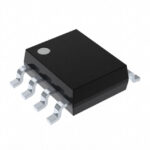 MAX3488EESA+T
The activity of extra discounts on wholesale prices is in full swing…
Please fill in your contact information and we will send you the latest wholesale price list.





