 ChipApex | Global Electronic Components Supplier
SEARCH
Search Product
Search Post
— IC芯片 | 连接器 | 传感器 | 被动器件 —
Search productSearch post
— IC芯片 | 连接器 | 传感器 | 被动器件 —
Consult the customer manager about the wholesale price.
consultation hotline:86-132-6715-2157
email:[email protected]
Contact the product manager for consultation. One-stop consultation is available.
Do you want a lower wholesale price? Please send us your inquiry and we will reply immediately.
The MAX3490ECSA-T is a full-duplex RS-485/RS-422 transceiver operating from a single +3.3V supply without a charge pump. It supports data rates up to 12Mbps with a typical propagation delay of 22ns and skew of 8ns. The device provides ±15kV ESD protection (HBM) and withstands ±8kV IEC 1000-4-2 contact discharge. It features current-limiting and thermal shutdown for driver overload protection, a -7V to +12V common-mode range, and fail-safe receiver inputs. Packaged in an 8-pin SOIC, it operates within a commercial temperature range of 0°C to +70°C.
Verify the specific suffix 'C' indicates the commercial temperature range (0°C to +70°C), distinct from the industrial grade 'E' variant (-40°C to +85°C). Confirm the 'T' suffix corresponds to tape-and-reel packaging requirements for automated assembly processes. Cross-reference the manufacturer's official ordering guide to ensure compatibility with the intended PCB footprint and RoHS compliance status.
Select this component for designs requiring full-duplex RS-485 or RS-422 connectivity at speeds up to 12Mbps. It is suitable for applications needing robust ESD immunity and operation from a standard 3.3V logic supply. Ensure the design environment remains within the 0°C to +70°C commercial temperature limits. Consider the 8-pin SOIC package dimensions for layout constraints.
This part belongs to the MAX3483E family of low-power transceivers manufactured by Analog Devices Inc./Maxim Integrated. The MAX3490E specifically provides full-duplex functionality, unlike the half-duplex MAX3485E. It utilizes the industry-standard 75176 pinout configuration, facilitating direct replacement in legacy designs while offering enhanced ESD protection characteristics compared to older generations.
MAX3490EESA+T
No, the MAX3490E does not include Receiver Enable (RE) or Driver Enable (DE) control pins required for the low-power shutdown mode found in other family members like the MAX3485E.
The device supports a common-mode input voltage range of -7V to +12V, allowing operation on buses with significant common-mode noise or offset.
It employs current-limiting circuitry to protect against short circuits and thermal shutdown circuitry that forces outputs to a high-impedance state if die temperature exceeds safe limits.
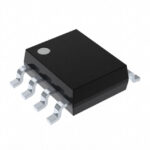 MAX3490ECSA-T
The activity of extra discounts on wholesale prices is in full swing…
Please fill in your contact information and we will send you the latest wholesale price list.





