 ChipApex | Global Electronic Components Supplier
SEARCH
Search Product
Search Post
— IC芯片 | 连接器 | 传感器 | 被动器件 —
Search productSearch post
— IC芯片 | 连接器 | 传感器 | 被动器件 —
Consult the customer manager about the wholesale price.
consultation hotline:86-132-6715-2157
email:[email protected]
Contact the product manager for consultation. One-stop consultation is available.
Do you want a lower wholesale price? Please send us your inquiry and we will reply immediately.
The MAX3491ECSD+T is a +3.3V, low-power transceiver for RS-485 and RS-422 communications manufactured by Analog Devices/Maxim Integrated. It contains one driver and one receiver supporting full-duplex communication with data rates up to 12Mbps. The device operates from a single supply voltage ranging from 3.0V to 3.6V and draws a typical supply current of 2.2mA. It features ±15kV ESD protection on all I/O pins per the Human Body Model and ±8kV via IEC 1000-4-2 Contact Discharge. The component utilizes a 14-pin SOIC package and functions within an operating temperature range of 0°C to +70°C.
Verify the specific suffix 'ECSD' confirms the extended commercial temperature range (0°C to +70°C), the 14-pin SOIC package format, and lead-free RoHS compliance. Confirm the '+T' designation indicates tape-and-reel packaging rather than cut tape or tube formats. Cross-reference the manufacturer part number against official Analog Devices documentation to ensure authenticity and correct revision status before procurement.
Select this component for designs requiring full-duplex RS-485 or RS-422 connectivity at speeds up to 12Mbps. It is suitable for environments demanding robust ESD immunity without external protection components. Ensure the application supports a single +3.3V power supply and requires the specific 14-pin footprint. Verify that the commercial temperature range meets the operational requirements of the target environment.
This device belongs to the MAX3483E family of low-power transceivers designed for RS-485 and RS-422 standards. Unlike half-duplex variants in the same series, the MAX3491E provides simultaneous two-way communication. It shares common interface characteristics with other family members but is distinct in its pin count and duplex operation mode, differentiating it from the 8-pin half-duplex options.
The MAX3490E serves as a functional substitute within the same family but lacks the Receiver Enable (RE) and Driver Enable (DE) control pins found on the MAX3491E. Designers must verify if hardware flow control signals are required; if so, the MAX3490E may not be directly interchangeable without schematic modifications.
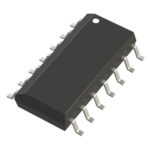 MAX3491ECSD+T
The activity of extra discounts on wholesale prices is in full swing…
Please fill in your contact information and we will send you the latest wholesale price list.





