 ChipApex | Global Electronic Components Supplier
SEARCH
Search Product
Search Post
— IC芯片 | 连接器 | 传感器 | 被动器件 —
Search productSearch post
— IC芯片 | 连接器 | 传感器 | 被动器件 —
Consult the customer manager about the wholesale price.
consultation hotline:86-132-6715-2157
email:[email protected]
Contact the product manager for consultation. One-stop consultation is available.
Do you want a lower wholesale price? Please send us your inquiry and we will reply immediately.
The MAX3658AETA+ is a transimpedance preamplifier designed for optical receivers operating up to 622Mbps. It features low noise, high gain, and low power dissipation, making it suitable for fiber access and small form-factor transceivers. The device operates from a +3.3V supply with a typical current consumption of 26mA, resulting in 66mW power dissipation. Key electrical parameters include an input-referred noise of 45nARMS, a transimpedance gain of 18.3kΩ, and a bandwidth of 580MHz. It supports a 2mAP-P input overload and provides an average photocurrent monitor.
Verify the package code T833-3 corresponds to the 8-pin TDFN (3mm x 3mm) configuration. Confirm the temperature range is -40°C to +85°C. Ensure the lead-free designation (+) matches environmental compliance requirements. Cross-reference the ordering information table to validate the specific suffix against the required pinout and polarity.
Select this component for applications requiring high sensitivity and low jitter at data rates up to 622Mbps. Consider the 45nARMS noise figure and -33dBm optical sensitivity for long-reach or low-power links. Evaluate the 580MHz bandwidth against system requirements. Verify compatibility with the +3.3V supply voltage and check if the integrated photocurrent monitor meets diagnostic needs.
The MAX3658 series includes die options (MAX3658A/D and MAX3658B/D) offering different output polarities. The MAX3658AETA+ is the packaged version of the MAX3658A variant, housed in an 8-lead TDFN package. This family is optimized for fiber optic applications where low capacitance and high gain are critical for maintaining signal integrity.
Public confirmed substitute part numbers: None identified in source material.
Schottky diodes clamp the output signal for large input currents to prevent damage and limit the output swing.
The FILT pin connects to an optional filter network used to bias the photodiode cathode and reduce supply noise effects on performance.
Yes, grounding the FILT pin disables the DC cancellation circuit, though normal operation requires it to be enabled.
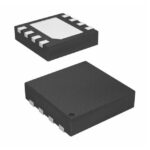 MAX3658AETA+
The activity of extra discounts on wholesale prices is in full swing…
Please fill in your contact information and we will send you the latest wholesale price list.





