 ChipApex | Global Electronic Components Supplier
SEARCH
Search Product
Search Post
— IC芯片 | 连接器 | 传感器 | 被动器件 —
Search productSearch post
— IC芯片 | 连接器 | 传感器 | 被动器件 —
Consult the customer manager about the wholesale price.
consultation hotline:86-132-6715-2157
email:[email protected]
Contact the product manager for consultation. One-stop consultation is available.
Do you want a lower wholesale price? Please send us your inquiry and we will reply immediately.
The MAX3710ETG+T is a 125Mbps to 2.5Gbps integrated limiting amplifier and burst mode laser driver designed for GPON/EPON ONU applications. It operates on a 2.97V to 3.63V supply with typical current of 110mA at 2.5Gbps. The device features a low-noise receiver with 1.3mVP-P sensitivity, dual-loop power control (APC and ERC), and a 3-wire digital interface. Packaged in a 4mm x 4mm 24-pin TQFN, it supports LVDS, LVPECL, and CML I/Os across a -40°C to +95°C temperature range.
Verify the specific suffix ETG+T against official documentation to confirm package type and RoHS compliance. Ensure the ordering information matches the exact part number variant required for your design. Cross-reference the datasheet revision date to confirm all electrical characteristics are current. Confirm thermal requirements for the TQFN package during procurement planning.
Select this component for designs requiring high integration of limiting amplification and laser driving functions. It is suitable for applications needing programmable output levels and slew-rate adjustment for EPON compatibility. Consider the 3-wire interface requirements for controller selection. Evaluate the exposed pad thermal management needs for the TQFN package in dense layouts.
This device belongs to Maxim Integrated's portfolio of optical transceiver components. It serves as a complete Physical Medium Dependent solution for passive optical networks. The integration reduces system size and component count compared to discrete solutions. It is designed to work with standard laser diodes and monitor photodiodes in cost-sensitive ONU architectures.
No public confirmed substitute part numbers are available in the provided documentation.
It includes an integrated Extinction Ratio Control (ERC) loop that eliminates the need for temperature lookup tables by automatically controlling the modulation current.
The device supports LVDS, LVPECL, and CML compatible high-speed inputs for both the transmitter and receiver sections.
Yes, the MDIN pin can be left open for open-loop operation, although closed-loop provides better performance stability.
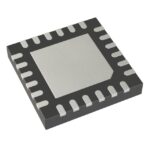 MAX3710ETG+T
The activity of extra discounts on wholesale prices is in full swing…
Please fill in your contact information and we will send you the latest wholesale price list.





