 ChipApex | Global Electronic Components Supplier
SEARCH
Search Product
Search Post
— IC芯片 | 连接器 | 传感器 | 被动器件 —
Search productSearch post
— IC芯片 | 连接器 | 传感器 | 被动器件 —
Consult the customer manager about the wholesale price.
consultation hotline:86-132-6715-2157
email:[email protected]
Contact the product manager for consultation. One-stop consultation is available.
Do you want a lower wholesale price? Please send us your inquiry and we will reply immediately.
The MAX3748HETE+ is a compact, low-power multirate limiting amplifier designed for SONET, Fibre Channel, and Gigabit Ethernet optical receivers. It functions as a data quantizer, accepting wide input voltage ranges to provide constant-level current-mode logic outputs with controlled edge speeds. The device operates on a single 3.3V supply within the -40°C to +85°C temperature range. It features an RSSI interface when paired with the MAX3744 TIA, offering up to 19dB dynamic range. Packaged in a 3mm x 3mm 16-pin thin QFN with an exposed pad, it supports SFF-8472 digital diagnostic specifications.
Verify component authenticity through authorized distribution channels. Confirm RoHS compliance status by checking the specific ordering suffix against manufacturer documentation. Ensure environmental ratings match application requirements before integration into final designs.
Evaluate input sensitivity and overload thresholds relative to the connected photodiode or transimpedance amplifier. Consider the offset correction loop capacitor requirements based on the specific data coding scheme used. Verify power supply noise rejection capabilities for the target operating environment.
This component belongs to the MAX3748 family of high-speed limiting amplifiers manufactured by Analog Devices Inc./Maxim Integrated. It is specifically engineered for optical communication receiver front-ends requiring precise signal regeneration and diagnostic monitoring capabilities.
Consult official manufacturer documentation for confirmed substitute part numbers. Cross-reference package dimensions and pin configurations to ensure mechanical compatibility. Verify electrical parameter alignment with original design specifications.
The LOS threshold is set by connecting an external resistor (RTH) between the TH pin and ground. The value of this resistor determines the assert and deassert levels.
For ATM/SONET applications using scrambled NRZ data, a capacitor of 0.1μF is recommended between pins CAZ1 and CAZ2 to maintain stability and manage the low-frequency cutoff.
Connecting the DISABLE pin to VCC holds the data outputs static, effectively implementing a squelch function while keeping the LOS detection active.
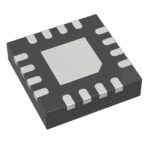 MAX3748HETE+
The activity of extra discounts on wholesale prices is in full swing…
Please fill in your contact information and we will send you the latest wholesale price list.





