 ChipApex | Global Electronic Components Supplier
SEARCH
Search Product
Search Post
— IC芯片 | 连接器 | 传感器 | 被动器件 —
Search productSearch post
— IC芯片 | 连接器 | 传感器 | 被动器件 —
Consult the customer manager about the wholesale price.
consultation hotline:86-132-6715-2157
email:[email protected]
Contact the product manager for consultation. One-stop consultation is available.
Do you want a lower wholesale price? Please send us your inquiry and we will reply immediately.
The MAX3800UTJ+T is a +3.3V adaptive cable equalizer and cable driver integrated on a single chip, designed for coaxial and twin-axial point-to-point communications. It supports data rates up to 3.2Gbps and automatically adjusts to attenuation caused by skin-effect losses of up to 30dB at 1.6GHz. The device features differential CML inputs and outputs with adjustable output amplitude. Key specifications include a supply current of 65mA typical, power dissipation of 200mW at +3.3V, and an operating temperature range of 0°C to +85°C. It is housed in a 32-pin TQFP package with an exposed pad.
Verify the specific suffix UTJ against the official datasheet ordering information, as standard listings typically specify UGJ or UHJ packages. Confirm lead-free status (+ suffix) and thermal pad requirements for surface-mount assembly. Ensure compatibility with the required 32-TQFP-EP footprint during procurement planning.
Select this component for applications requiring simultaneous signal driving and adaptive equalization on copper cables. Consider the 3.2Gbps maximum data rate and 30dB equalization capability at 1.6GHz. Evaluate the 32-pin TQFP-EP package for thermal management needs and verify interface compatibility with CML signaling standards.
The MAX3800 belongs to Maxim Integrated's family of high-speed cable equalizers and drivers. It combines transmitter and receiver functions to simplify board design for serial digital video and telecommunications. The device addresses signal degradation in copper media through automatic gain adjustment and skin-effect compensation.
Publicly confirmed substitute part numbers are not available in the provided documentation. Verify pinout and electrical characteristics with alternative devices from the same manufacturer if direct replacements are considered.
The output amplitude is adjusted by connecting a resistor between the RMOD pin and ground. A resistance value between 10kΩ and 20kΩ allows for typical output voltage adjustments ranging from 450mV to 870mV.
The CIM output provides an analog indication of the amount of equalization being applied by the device. It can be monitored by measuring the voltage at the CIM pins with resistors connected to ground.
The LOS output goes low when the equalizer input signal power drops below a threshold, indicating a loss of signal due to issues such as a broken cable or defective driver. It goes high when sufficient input voltage is detected.
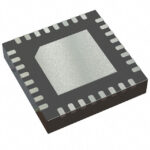 MAX3800UTJ+T
The activity of extra discounts on wholesale prices is in full swing…
Please fill in your contact information and we will send you the latest wholesale price list.







