 ChipApex | Global Electronic Components Supplier
SEARCH
Search Product
Search Post
— IC芯片 | 连接器 | 传感器 | 被动器件 —
Search productSearch post
— IC芯片 | 连接器 | 传感器 | 被动器件 —
Consult the customer manager about the wholesale price.
consultation hotline:86-132-6715-2157
email:[email protected]
Contact the product manager for consultation. One-stop consultation is available.
Do you want a lower wholesale price? Please send us your inquiry and we will reply immediately.
The MAX3861EGG is a low-power amplifier with automatic gain control designed for WDM transmission systems employing optical amplifiers. Operating from a single 3.3V supply, it linearly amplifies or attenuates input signals while maintaining a fixed output-voltage swing at data rates up to 2.7Gbps. The device features on-chip 50Ω terminated inputs and outputs, a small-signal bandwidth of 3.4GHz, and an input-referred noise of 0.26mV RMS. It delivers a constant output amplitude adjustable from 400mV P-P to 920mV P-P over a 46dB input range.
Verify the specific ordering suffix against the manufacturer's current documentation to ensure package compatibility and temperature range alignment. Confirm that the component meets all necessary environmental compliance standards required for the intended deployment environment before finalizing procurement decisions.
Select this component when designing receivers requiring precise amplitude regulation and signal integrity monitoring at high data rates. Ensure the design accommodates the required external capacitors for offset cancellation and AGC loop stability. Verify that the power supply constraints align with the specified operating voltage range for optimal performance.
This part belongs to the MAX3861 family of post-amplifiers featuring automatic gain control. It is specifically engineered for high-speed optical communication applications where signal consistency is critical. The device integrates essential monitoring functions directly into the amplifier structure, simplifying receiver design complexity.
No official substitute part numbers are confirmed in the provided documentation.
The SD threshold is programmed by connecting an external resistor between the TH pin and ground, allowing adjustment within a range of 2mV P-P to 100mV P-P.
The automatic gain-control loop time constant is determined by the external capacitor connected between the CG+ and CG- pins, with a recommended minimum value of 0.0022µF.
Output amplitude is adjusted by applying a control voltage between 0V and 2.0V to the SC pin, allowing the differential output amplitude to be set from 400mV P-P to 920mV P-P.
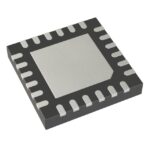 MAX3861EGG
The activity of extra discounts on wholesale prices is in full swing…
Please fill in your contact information and we will send you the latest wholesale price list.





