 ChipApex | Global Electronic Components Supplier
SEARCH
Search Product
Search Post
— IC芯片 | 连接器 | 传感器 | 被动器件 —
Search productSearch post
— IC芯片 | 连接器 | 传感器 | 被动器件 —
Consult the customer manager about the wholesale price.
consultation hotline:86-132-6715-2157
email:[email protected]
Contact the product manager for consultation. One-stop consultation is available.
Do you want a lower wholesale price? Please send us your inquiry and we will reply immediately.
The MAX3945ETE+ is a +3.3V, multirate limiting amplifier designed for Fibre Channel and Ethernet transmission systems operating at data rates from 1.0625Gbps to 11.3Gbps. It converts transimpedance amplifier signals into CML-level differential outputs with optimal 50-ohm back termination. The device features dual-path limiting amplifiers with programmable filtering to optimize sensitivity and suppress relaxation oscillations. It incorporates two loss-of-signal circuits and a programmable time mask. A 3-wire digital interface enables control of LOS threshold, polarity, output level, and input filters without external components.
Verify the specific ordering suffix ETE+ indicates lead-free and RoHS compliance as per manufacturer standards. Confirm the package type is TQFN-EP with an exposed pad requiring solder connection to ground. Ensure compatibility with the required 3.3V supply voltage range of 2.85V to 3.63V for proper operation.
Select this component when designing optical transceivers requiring support for data rates up to 11.3Gbps. The dual-path limiter allows optimization for both lower rates like 1.25Gbps and higher rates like 10.32Gbps. Consider the programmable deemphasis and output amplitude settings if signal integrity compensation for FR4 board losses is necessary.
This part belongs to the Maxim Integrated family of high-speed optical receiver components. It serves as a limiting amplifier stage typically positioned after the transimpedance amplifier in optical transceiver modules. The device complements other interface and driver ICs within the same product ecosystem for complete optical link solutions.
No official replacement part numbers are confirmed in the provided documentation.
The device incorporates two loss-of-signal circuits that can operate based on either the differential input signal amplitude or the voltage at the RPMIN pin. The mode is selected via digital control bits, allowing flexibility in detecting signal loss.
The programmable masking time prevents false LOS assertions caused by short bursts of input signals or glitches that may occur after a loss-of-light event. This feature ensures stable link diagnostics by ignoring transient signals shorter than the programmed duration.
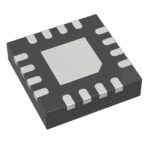 MAX3945ETE+
The activity of extra discounts on wholesale prices is in full swing…
Please fill in your contact information and we will send you the latest wholesale price list.





