 ChipApex | Global Electronic Components Supplier
SEARCH
Search Product
Search Post
— IC芯片 | 连接器 | 传感器 | 被动器件 —
Search productSearch post
— IC芯片 | 连接器 | 传感器 | 被动器件 —
Consult the customer manager about the wholesale price.
consultation hotline:86-132-6715-2157
email:[email protected]
Contact the product manager for consultation. One-stop consultation is available.
Do you want a lower wholesale price? Please send us your inquiry and we will reply immediately.
The MAX3945ETE+T is a +3.3V, multirate limiting amplifier designed for Fibre Channel and Ethernet transmission systems operating at data rates from 1.0625Gbps to 11.3Gbps. It converts transimpedance amplifier signals into CML-level differential outputs with optimal back-termination for 50Ω PCB traces. The device features dual-path limiting with programmable filtering to optimize sensitivity and suppress relaxation oscillations. It incorporates two loss-of-signal circuits and a programmable time mask. A 3-wire digital interface enables control of LOS threshold, polarity, output level, and input filters without external components.
Verify the specific ordering suffix against the manufacturer's current documentation to ensure correct temperature range and package configuration. Confirm that the exposed pad connection requirements are met during assembly to maintain thermal performance and electrical grounding as specified in the datasheet.
Select this component when designing optical transceivers requiring support for multiple data rates up to 11.3Gbps. Ensure the system design accommodates the 3mm x 3mm 16-pin TQFN package dimensions and provides adequate thermal relief for the exposed pad. Verify compatibility with the host controller's 3-wire interface timing specifications.
This part belongs to the Maxim Integrated family of high-speed optical receiver amplifiers. It is specifically engineered to complement laser drivers in transmit/receive chipsets for short-reach and long-reach optical networking applications. The device addresses the need for flexible signal conditioning in dense small form-factor pluggable modules.
No official substitute part numbers are confirmed in the provided documentation.
An external capacitor connected between the CAZ pin and ground sets the cutoff frequency. It is approximately 2kHz when RATE_SEL = 0 and 0.7kHz when RATE_SEL = 1. The loop can be disabled via the digital interface.
The MAX3945 supports Rx input-based LOS detection, which compares differential input amplitude against a threshold, and RSSI monitor-based LOS detection, which compares the voltage at the RPMIN pin against a threshold.
A programmable LOS output masking time feature masks false input signals caused by glitches or relaxation oscillations. This time can be set from 0 to 4500Fs in 35Fs steps using the SET_LOSTIMER register.
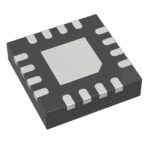 MAX3945ETE+T
The activity of extra discounts on wholesale prices is in full swing…
Please fill in your contact information and we will send you the latest wholesale price list.







