 ChipApex | Global Electronic Components Supplier
SEARCH
Search Product
Search Post
— IC芯片 | 连接器 | 传感器 | 被动器件 —
Search productSearch post
— IC芯片 | 连接器 | 传感器 | 被动器件 —
Consult the customer manager about the wholesale price.
consultation hotline:86-132-6715-2157
email:[email protected]
Contact the product manager for consultation. One-stop consultation is available.
Do you want a lower wholesale price? Please send us your inquiry and we will reply immediately.
The MAX3956AETJ+ is a highly integrated Ethernet IC transceiver designed for 10GBASE-LR SFP+ optical modules. It operates at data rates up to 11.3Gbps and features a direct-modulation laser (DML) driver with a digital diagnostic monitor (DDM). The device utilizes a proprietary DC-coupled laser interface to achieve low power consumption, with total SFP+ module power dissipation under 0.8W and IC power dissipation of 380mW at 3.3V. It provides transmit mask margin performance exceeding 50 percent with zero mask hits in 1k waveforms. The component is housed in a 32-lead TQFN package and supports an operating supply voltage range from 2.85V to 3.47V.
Verify the specific suffix designation against the manufacturer's current ordering guide, as packaging or environmental compliance variations may exist between tape-and-reel and tube formats. Confirm RoHS status and lead time requirements directly with authorized distributors prior to procurement. Ensure the selected variant matches the required application temperature range and pinout configuration for the target PCB design.
Select this component for designs prioritizing low power dissipation in 10GbE applications. The DC-coupled interface simplifies external circuitry compared to AC-coupled alternatives. Evaluate the thermal management capabilities of the host system, as the device enables sub-0.8W module power. Ensure compatibility with the intended laser diode characteristics and verify that the 32TQFN package fits the mechanical constraints of the SFP+ form factor.
The MAX3956 series belongs to Maxim Integrated's portfolio of high-speed optical transceiver ICs. It complements devices like the MAX3955, which offers similar functionality but may differ in specific interface configurations or pinouts. These components are engineered to address the trade-off between high performance and power efficiency in modern optical networking hardware.
The MAX3955ETJ+ is a related device within the same family. Verify functional equivalence regarding the laser interface type and pin compatibility before substitution. Cross-reference datasheets to confirm identical data rate support and regulatory compliance for the specific end-use environment.
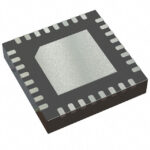 MAX3956AETJ+
The activity of extra discounts on wholesale prices is in full swing…
Please fill in your contact information and we will send you the latest wholesale price list.





