 ChipApex | Global Electronic Components Supplier
SEARCH
Search Product
Search Post
— IC芯片 | 连接器 | 传感器 | 被动器件 —
Search productSearch post
— IC芯片 | 连接器 | 传感器 | 被动器件 —
Consult the customer manager about the wholesale price.
consultation hotline:86-132-6715-2157
email:[email protected]
Contact the product manager for consultation. One-stop consultation is available.
Do you want a lower wholesale price? Please send us your inquiry and we will reply immediately.
The MAX3964AETP+ is a limiting amplifier IC designed for optical network applications, serving as a recommended upgrade to the MAX3964 and MAX3968. It operates on a single +3.0V to +5.5V supply and features PECL data outputs with 2mV peak-to-peak input sensitivity. The device integrates a power detector providing an analog received-signal-strength indicator and complementary loss-of-signal outputs. It supports data rates from 125Mbps to 155Mbps and includes an output squelch function. The component is housed in a compact 20-pin Thin QFN package.
Verify the specific ordering suffix against the manufacturer's current documentation to ensure correct package type and temperature range compliance. Confirm that the lead-free designation matches project requirements. Cross-reference the part number with official distributor catalogs to validate active status and availability before finalizing procurement plans.
Select this component for fiber optic receiver designs requiring high input sensitivity and integrated signal monitoring. Ensure the design accommodates PECL termination requirements at the data and LOS outputs. Verify that the external capacitor values for offset correction and filtering align with the recommended typical operating circuit specifications for optimal performance.
This device belongs to the MAX3964/MAX3968 family of limiting amplifiers manufactured by Analog Devices Inc./Maxim Integrated. It is positioned as a direct replacement or upgrade for legacy MAX3964 and MAX3968 parts in existing optical network infrastructure designs, offering improved ESD tolerance and standardized packaging options.
The MAX3969 is officially designated as a recommended upgrade for the MAX3964, MAX3964A, and MAX3968 families. Designers should evaluate the MAX3969 for new implementations or replacements to benefit from updated specifications while maintaining functional compatibility.
The threshold is set using an internal op amp where external gain-setting resistors (R1 and R2) determine the VTH voltage between 1.2V and 2.4V.
Connecting the SQUELCH pin to VCC enables the squelch function, which forces the data outputs to a known state during a loss-of-signal condition to prevent noise response.
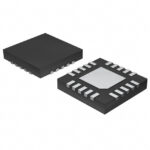 MAX3964AETP+
The activity of extra discounts on wholesale prices is in full swing…
Please fill in your contact information and we will send you the latest wholesale price list.







