 ChipApex | Global Electronic Components Supplier
SEARCH
Search Product
Search Post
— IC芯片 | 连接器 | 传感器 | 被动器件 —
Search productSearch post
— IC芯片 | 连接器 | 传感器 | 被动器件 —
Consult the customer manager about the wholesale price.
consultation hotline:86-132-6715-2157
email:[email protected]
Contact the product manager for consultation. One-stop consultation is available.
Do you want a lower wholesale price? Please send us your inquiry and we will reply immediately.
The MAX3964AETP+T is a limiting amplifier manufactured by Analog Devices Inc. under the Maxim Integrated brand, designed for optical networking applications. It operates within a supply voltage range of 3.0 V to 3.6 V and draws a typical operating current of 50 mA. The device supports data rates up to 10.7 Gbps and functions reliably across an extended temperature range from -40°C to +85°C. Packaged in a compact 20-WFQFN exposed pad surface-mount package, it integrates signal detection capabilities suitable for high-speed serial communication systems requiring precise amplitude limiting.
Verify component authenticity through authorized distribution channels due to potential availability constraints. Confirm specific suffix variations match exact electrical specifications before integration. Review latest manufacturer documentation for any updates regarding pin compatibility or recommended operating conditions to ensure reliable system performance.
Evaluate power consumption requirements against the specified 50 mA operating current to ensure adequate thermal management. Ensure the input signal swing aligns with the amplifier's dynamic range for optimal limiting performance. Consider the 20-WFQN package dimensions when designing PCB footprints to maintain proper soldering integrity and heat dissipation characteristics.
This component belongs to the MAX3964A series of limiting amplifiers, which are engineered for demanding optical interconnect environments. The series emphasizes low noise and high linearity to preserve signal integrity in long-haul and metro network applications. It serves as a critical interface between photodetectors and subsequent processing stages in modern optical systems.
Consult official manufacturer substitution guides for verified alternative part numbers. Ensure any replacement maintains identical pinout configurations and electrical parameters to avoid redesign efforts. Validate thermal and mechanical compatibility with existing assembly processes before implementation.
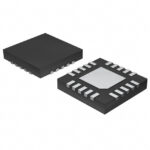 MAX3964AETP+T
The activity of extra discounts on wholesale prices is in full swing…
Please fill in your contact information and we will send you the latest wholesale price list.





