 ChipApex | Global Electronic Components Supplier
SEARCH
Search Product
Search Post
— IC芯片 | 连接器 | 传感器 | 被动器件 —
Search productSearch post
— IC芯片 | 连接器 | 传感器 | 被动器件 —
Consult the customer manager about the wholesale price.
consultation hotline:86-132-6715-2157
email:[email protected]
Contact the product manager for consultation. One-stop consultation is available.
Do you want a lower wholesale price? Please send us your inquiry and we will reply immediately.
The MAX4146EEE+ is a differential line receiver manufactured by Analog Devices Inc./Maxim Integrated. It operates within a supply voltage range of 4.5V to 5.5V and supports data rates up to 20Mbps. The device features three receivers per package and includes an enable input for power management. It is housed in a 16-SSOP (QSOP) surface-mount package with a width of 3.90mm. The component functions reliably across an extended industrial temperature range from -40°C to +85°C, ensuring stable performance in demanding electronic applications.
Verify the specific suffix 'EEE+' against the official datasheet to confirm the lead-free status and tape-and-reel or tube packaging configuration. Ensure the ordering part number matches the exact package dimensions and thermal characteristics required for your PCB layout. Cross-reference the manufacturer's latest documentation to confirm current production status and availability constraints before finalizing procurement plans.
Select this component when designing systems that require multiple differential receivers within a limited board space. It is suitable for applications needing robust noise immunity and high-speed data integrity over twisted-pair cables. Consider the 16-pin QSOP footprint for compatibility with existing footprints. Evaluate the enable functionality if power conservation during idle states is a critical design requirement.
This device belongs to the MAX4146 family of differential line receivers designed for high-speed serial communications. It complements driver components like the MAX483 to form complete transceiver solutions. The series is engineered for reliability in noisy environments, offering superior common-mode rejection compared to standard logic receivers. It serves as a key building block for robust industrial and commercial data links.
The MAX4146EUE+ is a direct pin-compatible alternative in a smaller SSOP package. Verify voltage levels and enable logic polarity when substituting. Check datasheets for any differences in propagation delay or common-mode voltage ranges to ensure system compatibility.
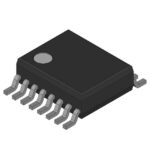 MAX4146EEE+
The activity of extra discounts on wholesale prices is in full swing…
Please fill in your contact information and we will send you the latest wholesale price list.





