 ChipApex | Global Electronic Components Supplier
SEARCH
Search Product
Search Post
— IC芯片 | 连接器 | 传感器 | 被动器件 —
Search productSearch post
— IC芯片 | 连接器 | 传感器 | 被动器件 —
Consult the customer manager about the wholesale price.
consultation hotline:86-132-6715-2157
email:[email protected]
Contact the product manager for consultation. One-stop consultation is available.
Do you want a lower wholesale price? Please send us your inquiry and we will reply immediately.
The MAX4373FESA-T is a low-cost, micropower high-side current-sense supervisor featuring an integrated amplifier, comparator, and bandgap reference. It operates from a single +2.7V to +28V supply with a 50µA typical supply current. The device provides a voltage output proportional to the sense resistor voltage drop, eliminating external gain-setting resistors. It features a 0V to +28V common-mode input range independent of supply voltage. The specific F suffix indicates a fixed gain of +50V/V. The comparator output is latching to prevent oscillation during overcurrent events.
Verify that the ordering suffix 'T' corresponds to the tape-and-reel packaging configuration required for automated assembly processes. Confirm that the 'F' designation matches the required +50V/V gain specification for the target circuit design. Ensure the SOIC-8 package type aligns with the printed circuit board footprint constraints. Cross-reference the manufacturer's latest documentation to confirm lead-free status and RoHS compliance requirements.
Select this component when a fixed +50V/V gain is appropriate for the maximum expected load current and sense resistor value. Consider the latching comparator feature if system protection requires a persistent fault flag without oscillation. Evaluate the 50µA supply current against strict power budget constraints in battery-operated devices. Verify that the 0V to +28V common-mode range covers the full discharge cycle of the monitored battery pack.
This device belongs to the MAX4373/MAX4374/MAX4375 family of supervisors. The MAX4373 variant includes a single latching comparator, whereas the MAX4374 and MAX4375 add a second comparator for window detection functions. All variants share the same core current-sense amplifier architecture and offer gains of +20V/V, +50V/V, or +100V/V depending on the middle letter in the part number.
MAX4373HESA+ (Gain +100V/V)
To prevent false latching, the RESET pin must be held low until the VCC supply rises above the minimum operating voltage of 2.7V. An external RC network can be used to maintain the low state during power-up.
The latching output ensures that once an overcurrent condition triggers the comparator, the output remains in the fault state even if the input signal drops below the threshold. This prevents oscillation and allows for a definitive turn-off flag.
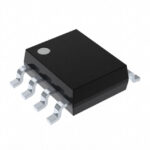 MAX4373FESA-T
The activity of extra discounts on wholesale prices is in full swing…
Please fill in your contact information and we will send you the latest wholesale price list.





