 ChipApex | Global Electronic Components Supplier
SEARCH
Search Product
Search Post
— IC芯片 | 连接器 | 传感器 | 被动器件 —
Search productSearch post
— IC芯片 | 连接器 | 传感器 | 被动器件 —
Consult the customer manager about the wholesale price.
consultation hotline:86-132-6715-2157
email:[email protected]
Contact the product manager for consultation. One-stop consultation is available.
Do you want a lower wholesale price? Please send us your inquiry and we will reply immediately.
The MAX4373HEUA+T is a low-cost, micropower high-side current-sense supervisor integrating a current-sense amplifier, bandgap reference, and latching comparator. It operates from a single +2.7V to +28V supply with a typical supply current of 50µA. The device features a gain of +100V/V, a common-mode input range of 0V to +28V independent of supply voltage, and an operating temperature range of -40°C to +85°C. Packaged in an 8-pin µMAX, it provides a voltage output proportional to the sense resistor voltage.
Verify the specific suffix HEUA+T corresponds to the +100V/V gain variant in the 8-pin µMAX package. Confirm RoHS compliance status as indicated by the plus sign. Ensure the design accounts for the latching comparator behavior, which requires a dedicated RESET signal to clear the output state after an overcurrent event.
Select this component when high-side monitoring is required without interfering with the ground path. The +100V/V gain is suitable for applications requiring higher output voltage swing from small sense voltages. Consider the 0V to +28V common-mode range for compatibility with various battery pack voltages. Verify that the external sense resistor can handle the expected power dissipation.
This part belongs to the MAX4373/MAX4374/MAX4375 family of supervisors. The MAX4373 variant includes a single comparator, whereas the MAX4374 and MAX4375 include two comparators for window detection functions. All variants share the same core amplifier architecture and are available in multiple gain options and package types.
Direct substitutes within the same family include MAX4373FEUA+T (+50V/V) and MAX4373TEUA+T (+20V/V). For dual-comparator functionality, consider MAX4374 or MAX4375 equivalents. Cross-family replacements require verification of pinout compatibility and electrical parameter alignment.
The latch is cleared by pulsing the RESET pin low for at least 1.5µs. Holding RESET low keeps the latch transparent.
The output voltage is internally clamped to not exceed 12V.
Yes, but total output voltage error increases when the RS+ voltage falls below 2V.
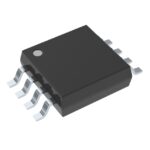 MAX4373HEUA+T
The activity of extra discounts on wholesale prices is in full swing…
Please fill in your contact information and we will send you the latest wholesale price list.






