 ChipApex | Global Electronic Components Supplier

SEARCH
Search Product
Search Post
— IC芯片 | 连接器 | 传感器 | 被动器件 —
Search productSearch post
— IC芯片 | 连接器 | 传感器 | 被动器件 —
Consult the customer manager about the wholesale price.
consultation hotline:86-132-6715-2157
email:[email protected]
Contact the product manager for consultation. One-stop consultation is available.
Do you want a lower wholesale price? Please send us your inquiry and we will reply immediately.
The MAX5439EUD+ is a high-voltage digital potentiometer featuring 128 tap positions and an integrated uncommitted amplifier. It operates with analog supplies ranging from ±5V to ±15V, or single-supply configurations such as +10V to +30V, provided the VDD-VSS differential exceeds 9V. The device utilizes a separate digital supply (VCC) of +2.7V to +5.25V. It offers 100kΩ end-to-end resistance with low drift characteristics: 35ppm/°C for end-to-end and 5ppm/°C ratiometric temperature coefficients. Packaged in a 14-pin TSSOP, it supports glitchless switching and includes a power-on reset function that initializes the wiper to midscale.
Verify component authenticity through authorized Analog Devices distributors. Confirm RoHS compliance status via official documentation. Ensure ordering suffixes match specific package and temperature requirements. Check for obsolescence notices or lifecycle changes directly from the manufacturer before procurement planning.
Select the MAX5439EUD+ when a 100kΩ resistance value and an internal amplifier are required. Choose this over the MAX5436/MAX5438 if the 14-pin TSSOP package is preferred over the 10-pin µMAX. Ensure the application voltage differential (VDD - VSS) remains within the 9V to 31.5V range while maintaining appropriate logic levels for the VCC supply.
The MAX5439EUD+ belongs to the MAX5436–MAX5439 family of ±15V digital potentiometers. This series replaces mechanical potentiometers with a digital interface. While the MAX5436 and MAX5438 lack an internal amplifier and use a 10-pin package, the MAX5437 and MAX5439 variants include the uncommitted amplifier and utilize a 14-pin TSSOP footprint.
Direct functional replacements within the same family include the MAX5437EUD+ for identical performance with 50kΩ resistance. Cross-family comparisons should consider the MAX5436/MAX5438 if the internal amplifier is unnecessary and space constraints favor the smaller 10-pin µMAX package.
The maximum allowable difference between VDD and VSS is 31.5V.
A power-on reset circuit forces the wiper position to midscale (Position 64) upon initialization.
Yes, it uses a 3-wire interface compatible with SPI, QSPI, and MICROWIRE standards.
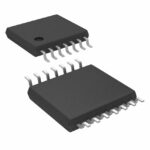 MAX5439EUD+

The activity of extra discounts on wholesale prices is in full swing…
Please fill in your contact information and we will send you the latest wholesale price list.





