 ChipApex | Global Electronic Components Supplier

SEARCH
Search Product
Search Post
— IC芯片 | 连接器 | 传感器 | 被动器件 —
Search productSearch post
— IC芯片 | 连接器 | 传感器 | 被动器件 —
Consult the customer manager about the wholesale price.
consultation hotline:86-132-6715-2157
email:[email protected]
Contact the product manager for consultation. One-stop consultation is available.
Do you want a lower wholesale price? Please send us your inquiry and we will reply immediately.
The MAX5479ETE#G16 is a dual, nonvolatile, linear-taper digital potentiometer featuring an I2C-compatible serial interface. It provides two independent potentiometers, each with 256 tap positions and a nominal end-to-end resistance of 100kΩ. The device operates on a single supply voltage ranging from +2.7V to +5.25V and includes internal EEPROM for power-on recall of wiper positions. Key electrical characteristics include a 70ppm/°C end-to-end resistance temperature coefficient, ±1 LSB integral nonlinearity in voltage-divider mode, and a maximum static supply current of 1µA. It supports data rates up to 400kbps and offers write protection capabilities.
Verify the ordering suffix #G16 against official manufacturer documentation to confirm specific packaging or compliance details. Ensure the selected package type matches the design requirements, as the MAX5479 series is available in both 16-pin TQFN and 14-pin TSSOP configurations. Confirm lead-free/RoHS compliance status if required by assembly specifications.
Select the MAX5479 variant specifically when a 100kΩ end-to-end resistance is required, distinguishing it from the 10kΩ (MAX5477) and 50kΩ (MAX5478) options. Consider the 16-pin TQFN package for compact board space requirements, noting the exposed paddle for thermal management. Evaluate the 70ppm/°C temperature coefficient against application drift tolerances.
This component belongs to the MAX5477/MAX5478/MAX5479 family of dual, nonvolatile, I2C-interface digital potentiometers manufactured by Analog Devices Inc./Maxim Integrated. The family shares identical functional architectures and pinouts, differing primarily in nominal resistance values and package options. The ETE suffix indicates the 16-pin Thin Quad Flatpack (TQFN) package configuration.
Direct substitutes within the same family include MAX5477ETE and MAX5478ETE, provided the resistance value difference (10kΩ or 50kΩ vs. 100kΩ) is acceptable for the circuit design. Verify that any replacement maintains the 16-pin TQFN footprint and I2C interface compatibility.
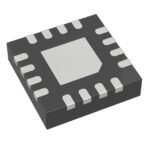 MAX5479ETE#G16

The activity of extra discounts on wholesale prices is in full swing…
Please fill in your contact information and we will send you the latest wholesale price list.





