 ChipApex | Global Electronic Components Supplier
SEARCH
Search Product
Search Post
— IC芯片 | 连接器 | 传感器 | 被动器件 —
Search productSearch post
— IC芯片 | 连接器 | 传感器 | 被动器件 —
Consult the customer manager about the wholesale price.
consultation hotline:86-132-6715-2157
email:[email protected]
Contact the product manager for consultation. One-stop consultation is available.
Do you want a lower wholesale price? Please send us your inquiry and we will reply immediately.
The MAX5941AESE+ is an IEEE 802.3af-compliant Powered Device (PD) interface and current-mode PWM controller designed for Power over Ethernet applications. It operates within a supply voltage range of 18V to 67V and supports a maximum power output of 12.95W. The component functions as a single-channel controller without internal switches, utilizing external MOSFETs for power handling. It is housed in a 16-SOIC package with a width of 3.90mm and is rated for operation across a temperature range of 0°C to 70°C.
Verify the specific suffix designation to confirm package type and tape/reel configuration, as variations exist between tube and reel packaging. Confirm RoHS compliance status through official documentation, as manufacturing updates may affect environmental certifications. Check for obsolescence notices or product change notifications prior to procurement, as this component family has undergone lifecycle changes.
Select this component when designing systems requiring strict adherence to IEEE 802.3af Powered Device protocols. Ensure the external MOSFET selection matches the current requirements, as the controller lacks internal switching elements. Verify that the operating voltage range aligns with the available PoE power source specifications. Consider thermal management strategies given the 12.95W maximum power capability in the SOIC-16 package.
This part belongs to the MAX5941 series of PoE controllers manufactured by Maxim Integrated, now part of Analog Devices Inc. The series includes variants such as MAX5941ACSE+ and MAX5941B, which share similar functional architectures but may differ in specific electrical characteristics or pin configurations. The MAX5941AESE+ specifically targets Powered Device applications rather than PSE interfaces.
Public confirmed substitute part numbers are not explicitly documented in the provided source material. Designers should consult official manufacturer cross-reference guides or engineering bulletins for validated alternatives. Generic replacements may require circuit redesign due to differences in control algorithms or pinout compatibility.
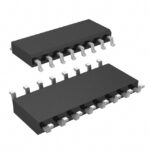 MAX5941AESE+
The activity of extra discounts on wholesale prices is in full swing…
Please fill in your contact information and we will send you the latest wholesale price list.






