 ChipApex | Global Electronic Components Supplier

SEARCH
Search Product
Search Post
— IC芯片 | 连接器 | 传感器 | 被动器件 —
Search productSearch post
— IC芯片 | 连接器 | 传感器 | 被动器件 —
Consult the customer manager about the wholesale price.
consultation hotline:86-132-6715-2157
email:[email protected]
Contact the product manager for consultation. One-stop consultation is available.
Do you want a lower wholesale price? Please send us your inquiry and we will reply immediately.
The MAX6030BEUR is a precision series voltage reference from the Maxim Integrated portfolio, housed in a compact SOT-23-3 surface-mount package. It delivers a fixed output of 3V with an initial accuracy of ±0.5%. The device operates within an input voltage range of 3.2V to 12.6V and draws a maximum supply current of 35µA. It maintains stability across a temperature range of -40°C to +85°C with a temperature coefficient of 75ppm/°C. Designed for low-power applications, it features a low-dropout architecture suitable for battery-powered systems requiring high precision.
Verify the specific suffix against official Analog Devices documentation to confirm exact tolerance and temperature grade. The 'BEUR' designation indicates a specific binning or packaging configuration; ensure compatibility with your PCB footprint and thermal requirements. Cross-reference with authorized distributors to confirm current availability status, as lead times may vary based on production cycles.
Select this component when system design demands a fixed 3V reference with moderate precision (±0.5%) in a minimal footprint. It is appropriate for applications where power consumption must be minimized without sacrificing significant accuracy. Compare against the MAX6030AEUR variant if tighter initial accuracy (±0.2%) is required, noting that the BEUR version offers a cost-effective solution for standard industrial specifications.
The MAX6030 series represents Maxim Integrated's approach to combining precision voltage referencing with low power consumption in small packages. Part of the broader PMIC family, it serves as a critical building block for signal conditioning chains. The BEUR variant specifically targets applications needing reliable performance in consumer and industrial electronics where board real estate is limited.
Direct substitutes include the MAX6030AEUR for higher accuracy needs or other series references from the same family. Verify pinout compatibility and thermal characteristics before substitution. Ensure any replacement maintains the required output voltage and current drive capabilities for the specific circuit load.
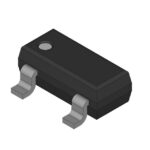 MAX6030BEUR

The activity of extra discounts on wholesale prices is in full swing…
Please fill in your contact information and we will send you the latest wholesale price list.





