 ChipApex | Global Electronic Components Supplier

SEARCH
Search Product
Search Post
— IC芯片 | 连接器 | 传感器 | 被动器件 —
Search productSearch post
— IC芯片 | 连接器 | 传感器 | 被动器件 —
Consult the customer manager about the wholesale price.
consultation hotline:86-132-6715-2157
email:[email protected]
Contact the product manager for consultation. One-stop consultation is available.
Do you want a lower wholesale price? Please send us your inquiry and we will reply immediately.
The MAX6071AAUT41+T is a low-noise, high-precision series voltage reference manufactured by Analog Devices Inc./Maxim Integrated. It provides a fixed output voltage of 4.096V with an initial accuracy of ±0.04% and a maximum temperature drift of 6ppm/°C (A grade). The device operates within an input voltage range of 4.3V to 5.5V and consumes a typical supply current of 150µA at +25°C. It supports bidirectional load currents up to ±10mA and features a shutdown current of 6µA. The component is housed in a compact 6-pin SOT-23 package and is specified for operation over the extended industrial temperature range of -40°C to +125°C.
Verify the specific ordering suffix to confirm the exact output voltage and package type, as variations exist within the MAX6071 family. Confirm RoHS compliance status through official documentation. Check for AEC-Q100 qualification if automotive reliability is required. Ensure the selected variant matches the required thermal and electrical specifications for the target application environment.
Select this component when low noise and high precision are critical requirements. The MAX6071 differs from the MAX6070 by lacking a filter option, resulting in faster turn-on settling times. Consider the dropout voltage requirements relative to the available supply voltage. Verify that the 4.096V output level aligns with the system's reference needs without requiring external scaling.
This part belongs to the MAX6070/MAX6071 series of low-noise, high-precision series voltage references. These devices are designed to enhance system accuracy in demanding environments. The series offers multiple output voltage options and packaging choices, including SOT-23 and WLP, to accommodate various board space constraints and application requirements.
MAX6070BAUT41+T
The MAX6071 does not include a filter option found in the MAX6070, which results in significantly faster turn-on and enable settling times.
The OUTS pin serves as the Voltage Reference Sense Output, allowing for remote sensing to compensate for trace resistance and improve load regulation accuracy.
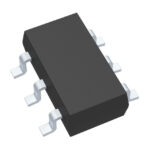 MAX6071AAUT41+T

The activity of extra discounts on wholesale prices is in full swing…
Please fill in your contact information and we will send you the latest wholesale price list.






