 ChipApex | Global Electronic Components Supplier

SEARCH
Search Product
Search Post
— IC芯片 | 连接器 | 传感器 | 被动器件 —
Search productSearch post
— IC芯片 | 连接器 | 传感器 | 被动器件 —
Consult the customer manager about the wholesale price.
consultation hotline:86-132-6715-2157
email:[email protected]
Contact the product manager for consultation. One-stop consultation is available.
Do you want a lower wholesale price? Please send us your inquiry and we will reply immediately.
The MAX6141ESA+ is a low-dropout, micropower three-terminal voltage reference providing a fixed output of 4.096V. It operates within a supply voltage range of 4.3V to 12.6V and delivers a typical quiescent current of 78µA at +25°C, increasing to 130µA across the full temperature range. The device features an initial accuracy of ±1% and a typical temperature coefficient of 15ppm/°C, guaranteed under 50ppm/°C. Designed for 3V and 5V systems, it exhibits a low dropout voltage of approximately 200mV and remains stable with capacitive loads up to 10nF.
Verify that the component matches the specific package type and temperature rating required for your design. Confirm RoHS compliance status through official manufacturer documentation or authorized distributors. Ensure ordering suffixes align with packaging preferences such as tube or reel quantities if applicable. Cross-reference datasheet specifications against system requirements before finalizing procurement decisions.
Select this component when a precise 4.096V reference is needed with minimal power consumption. Consider its low dropout characteristic for input voltages close to the output level. Evaluate thermal stability requirements against the specified temperature coefficient limits. Ensure load conditions remain within the stable capacitive range to maintain optimal settling time and performance characteristics.
This part belongs to the MAX61xx family of low-cost, low-dropout voltage references manufactured by Analog Devices Inc./Maxim Integrated. The series includes variants with different fixed output voltages (2.5V, 4.5V, 5.0V) and one adjustable model. All share similar architectural benefits including micropower operation and stability with capacitive loads, packaged in SOT23 or SO formats.
Direct substitutes within the same family include MAX6125ESA+, MAX6145ESA+, and MAX6150ESA+. These parts offer identical pinouts and functionality but differ in their fixed output voltages. Verify that the alternative voltage level meets the specific circuit requirements before substitution.
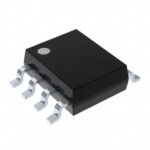 MAX6141ESA+

The activity of extra discounts on wholesale prices is in full swing…
Please fill in your contact information and we will send you the latest wholesale price list.





