 ChipApex | Global Electronic Components Supplier

SEARCH
Search Product
Search Post
— IC芯片 | 连接器 | 传感器 | 被动器件 —
Search productSearch post
— IC芯片 | 连接器 | 传感器 | 被动器件 —
Consult the customer manager about the wholesale price.
consultation hotline:86-132-6715-2157
email:[email protected]
Contact the product manager for consultation. One-stop consultation is available.
Do you want a lower wholesale price? Please send us your inquiry and we will reply immediately.
The MAX6150EUR-T is a low-dropout, micropower, three-terminal voltage reference providing a fixed 5.0V output in a 3-pin SOT23 package. It operates with a supply voltage range of 5.2V to 12.6V and draws a quiescent current of approximately 80µA at +25°C. The device features an initial accuracy of ±1% and a typical temperature coefficient of 15ppm/°C. Designed for stable operation across capacitive loads up to 10nF without external compensation, it supports continuous output short-circuit conditions.
Verify the specific ordering suffix against official manufacturer documentation to confirm package type and temperature range. Ensure compatibility with system input voltage requirements, as the MAX6150 requires a minimum supply voltage above its fixed output level. Confirm RoHS compliance status through authorized distributors or direct manufacturer channels prior to procurement.
Select this component when a fixed 5.0V precision reference is required in a compact surface-mount footprint. Consider the maximum allowable temperature coefficient if high-precision applications are involved. Evaluate the power budget carefully, as the quiescent current remains relatively constant regardless of load conditions. Verify that the available input voltage headroom accommodates the specified dropout voltage under all operating scenarios.
This part belongs to the MAX61xx family of low-cost, low-dropout voltage references manufactured by Analog Devices / Maxim Integrated. The family includes variants with different fixed output voltages (2.5V, 4.096V, 4.5V) and an adjustable version. All members share similar architectural characteristics, including micropower operation and stability with capacitive loads, but differ in their specific output voltage targets and pin configurations.
Direct replacements within the same family include the MAX6125EUR-T (2.5V), MAX6141EUR-T (4.096V), and MAX6145EUR-T (4.5V). These parts share identical pinouts and packaging but provide different fixed output voltages. Cross-family replacements require verification of pin compatibility, output voltage matching, and electrical performance specifications.
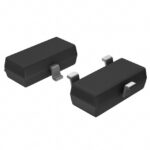 MAX6150EUR-T

The activity of extra discounts on wholesale prices is in full swing…
Please fill in your contact information and we will send you the latest wholesale price list.






